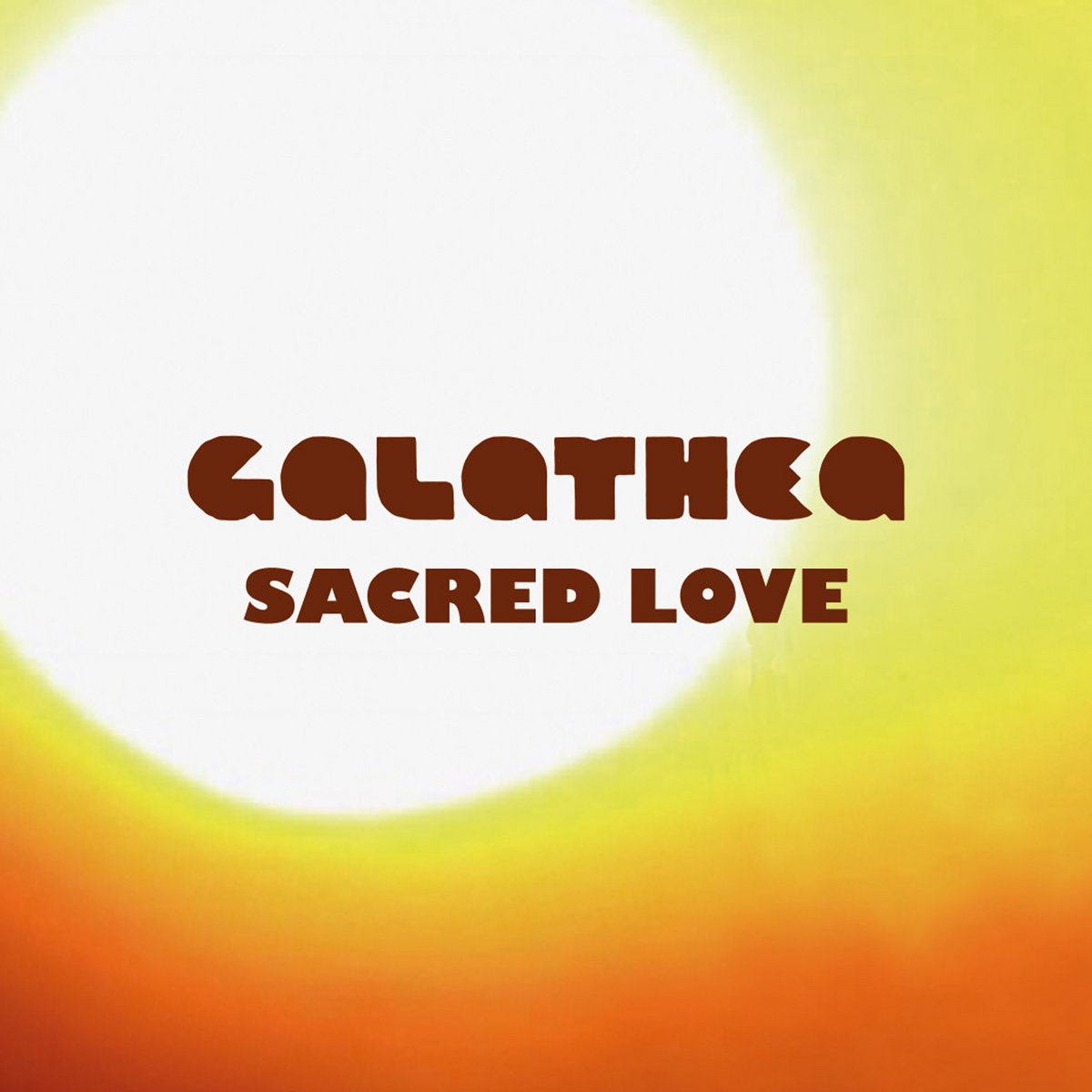
Two years after the release of his self-titled debut, DJ and producer Massimo Napoli—better known as Galathea—returns with a compelling new project: Sacred Love.
BUY
12″LP VINYL
DIGITAL
7″ SINGLE VINYL
In this latest work, Galathea reunites with longtime collaborator, bassist and producer Salvo Dub, and brings together a distinguished ensemble of musicians: Kadi Coulibaly, the Burkinabé vocalist who also featured on his first album; Giulia La Rosa, lyricist and voice behind the title track; pianist Mario Pappalardo, percussionist Sergio Spitaleri, and drummer Luciano Cantone.
Sacred Love marks a significant artistic evolution—more mature, intense, and introspective than its predecessor. The album draws deep from the spiritual and dreamlike roots of African culture, weaving a sonic journey rich in cross-cultural influences.
Tracks like Divinité, Ouaga, and Koloko—graced by Kadi’s evocative voice—explore the sacred and mystical essence of Africa, merging seamlessly with the textures of Western Spiritual Jazz. In Divinité, French poet Diego Hernandez delivers spoken word reflections on faith, existence, and self-awareness. His performance, infused with echoes of classic French chanson, finds harmony with Kadi’s soulful, almost Saharan tones—together expanding into a cosmic, meditative soundscape.
The title track, Sacred Love—also the album’s first single and released on 7″ vinyl in two versions—offers a vibrant blend of Afro-American gospel and afrobeat rhythms, subtly evoking Nina Simone’s See-Line Woman in its cadence and vocal delivery.
The journey continues across diverse soundscapes: Equator brings North African moods, while Medican Blues sails into the heart of the Mediterranean, before docking at Stromboli with Ginostra, a piece of deep jazz that pays homage to the picturesque village in the Aeolian Islands.
The Cuban-influenced Caminito is a romantic cha-cha, featuring a melodic piano line in the spirit of Chucho Valdés, masterfully interpreted by Mario Pappalardo. Eos offers a Balearic breeze tinged with Brazilian vibes, while Impression transports the listener on a dreamlike, emotionally resonant voyage.
The track Sirens, originally appearing on Galathea’s debut, returns here in a new spiritual-ambient version produced by Agosta, adding another layer to the album’s rich tapestry.
Sacred Love is an imaginative, genre-defying album that transcends musical boundaries.
It elevates the sacred traditions of African culture and fuses Afrobeat, Jazz, and Blues with the sun-soaked, Balearic influences of the Mediterranean—resulting in a deeply immersive and soul-stirring experience.
In addition to its digital and LP releases, “Sacred Love” will also be available as a 7″ vinyl (45 rpm) in two unique versions. This Afro-American-inspired track opens Side A (Logo Side) with a hypnotic jazz interpretation driven by a Tony Allen-style afrobeat rhythm.
BUY
7″VINYL
Digital
The soulful vocals of Giulia La Rosa, who also penned the lyrics, recall the raw, timeless energy of Nina Simone’s “See-Line Woman.”
Side B (This Side) features a stripped-down ‘Clapping Version’—a percussive take that removes the drums, offering DJs greater freedom to experiment and blend it with other grooves across genres.
“Sacred Love” also serves as the title track of Galathea’s upcoming album, due out in January 2024. The new project from Massimo Napoli reunites him with longtime collaborator Salvo Dub (producer and bassist), and features an impressive ensemble: vocalist Kadi Koulibaly from Burkina Faso—already known to fans from the debut album—jazz pianist Mario Pappalardo, percussionist Sergio Spitaleri, and drummer Luciano Cantone.
BUY THE ALBUM
12″LP VINYL
DIGITAL
With its fusion of afrobeat, jazz, and soulful expression, Sacred Love promises to be a standout release for those who appreciate rhythm, roots, and refined musical craftsmanship.
Every person we meet, every moment we live through, all the love we feel, and the losses we endure, add another layer to the intricate pattern of our lives.
BUY
12″ LP VINYL
DIGITAL
Like multicolored threads, these layers twist together to form a complex, vibrant tapestry – a reflection of our life journey until this point.
On his new album Layers, Khalab acknowledges and celebrates the encounters that have shaped his ever-evolving musical vision.
The record represents the culmination of a creative journey that began with Eunoto EP (Black Acre Records, 2015), evolved with the Afro-Futuristic soundscapes of 2018’s highly acclaimed album Black Noise 2084 (On The Corner Records), and has since developed further through a series of experiences and deep musical collaborations. Layers summons all the alchemy of Khalab’s live performances, and embodies the transcendental power of music-making as a collective art form.
“Since the release of Black Noise 2084 I’ve increasingly developed the stage and band dynamic, focusing on arranging with the musicians in mind, and this album was almost entirely conceived together with musicians I’ve collaborated with”, says Khalab.
In a testament to the label’s close-knit and highly collaborative nature, Khalab’s live band includes a cadre of musicians from the Hyperjazz family, including David Paulis and Enrico Truzzi of Phresoul, as well Pietro Santangelo, Fabio Sasso, and longstanding creative-partner Nicola Guida.
The album’s nine tracks feature an impressive lineup of collaborators old and new, including UK drummer and producer Emanative, Burkinabe singer, guitarist, and m’bira player Gabin Dabiré, Italian producer Clap! Clap!, multi-wind instrumentalist Tamar Osborn, drummer and producer Tommaso Cappellato, British-Bahraini trumpeter Yazz Ahmed, Bristol’s vocalist and producer Grove, multi-instrumentalist Tenderlonious, Italian jazz singer Alessia Obino and British-born Nigerian spoken-word artist Joshua Idehen.
Layers still revolve around the key components of Khalab’s sound – dark and trancey electronics and his research into Black music and all its evolutions – but with a bigger emphasis on harmonic arrangements.
Layers still revolve around the key components of Khalab’s sound – dark and trancey electronics and his research into Black music and all its evolutions – but with a bigger emphasis on harmonic arrangements.
Across the record, Khalab’s productions twist and pulsate into mesmerizing motifs, as the interplay between different instruments coalesce into focused melodies and rich, complex textures. Khalab and his collaborators masterfully blend gloomy and radiant tones, eliciting feelings of both doom and hope.
For Khalab, Layers represents the end point of a journey that began with the synthesis of ancestral rhythms and electronic experimentation on Black Noise 2084 and has taken him on a meandering route through a Mauritanian refugee camp (M’berra, Real World Recordings, 2021), and deep into the catalogs of legendary Italian labels Soul Note and Black Saint (for the Hyperituals compilations).
To Gabin, a friend, a teacher, a guide, and a constant inspiration.
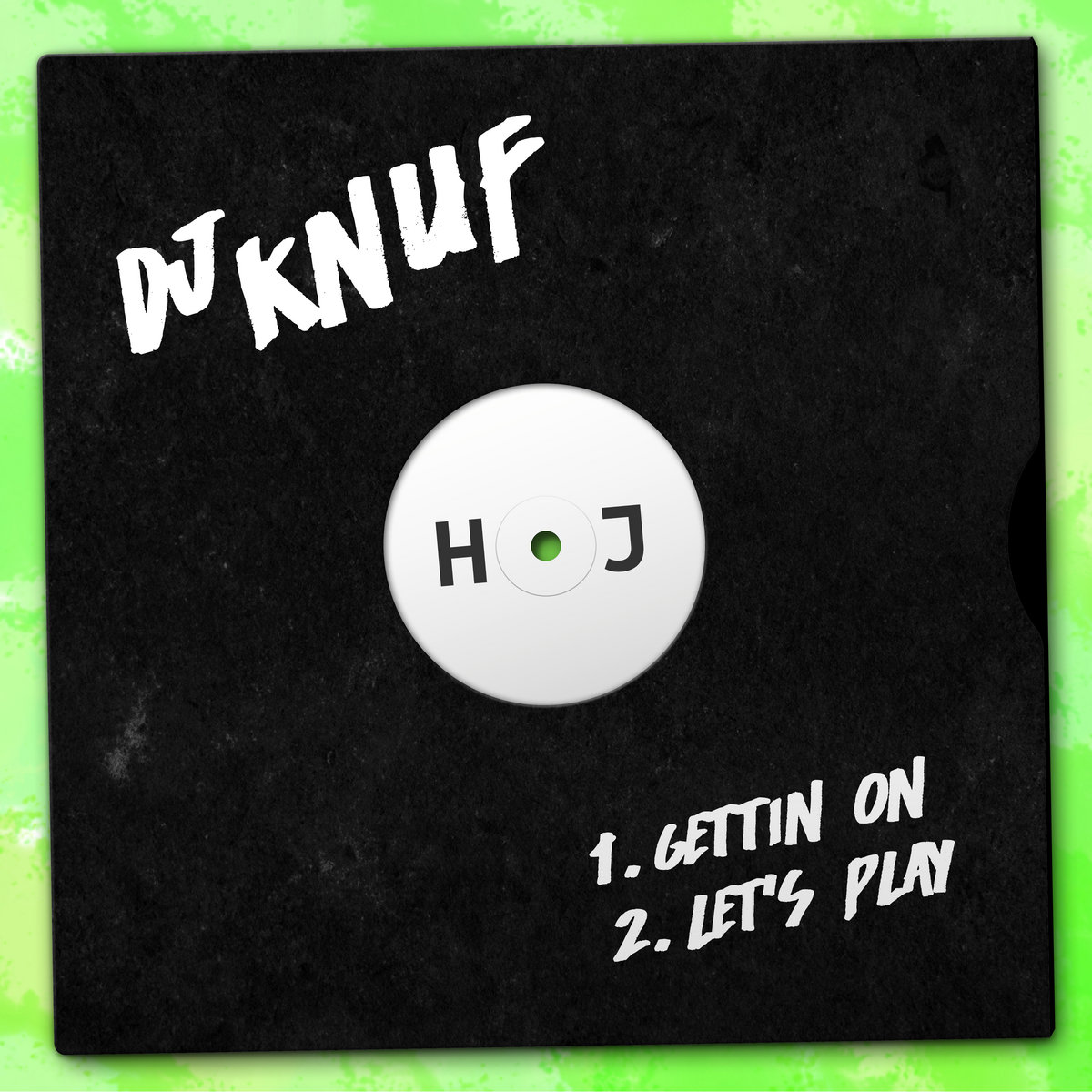
DJ Knuf continues to research the sounds of the late 80s and early 90s. Digging through his hip-hop collection, sampling countless samples, deconstructing and reworking them: hip-hop, jazz, soul, funk, and electronic music.
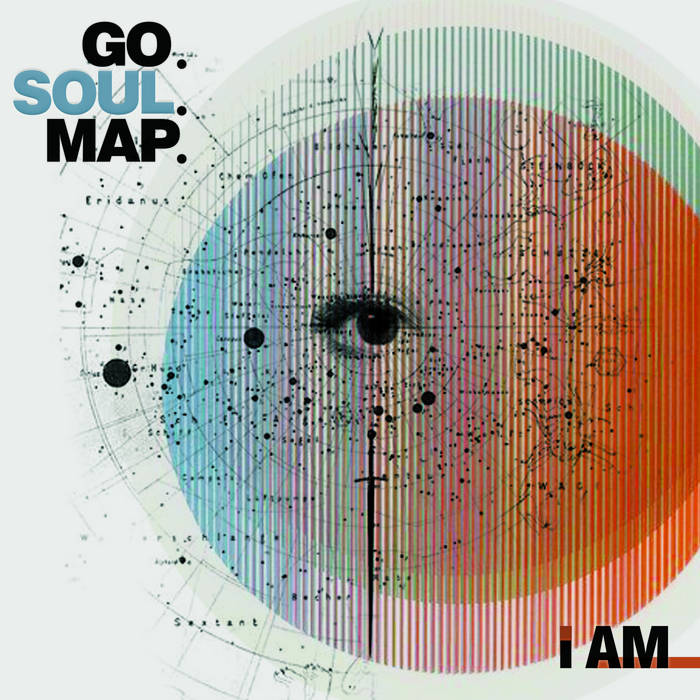
Harmony of sounds where pop, folk and soul intersect, mainstream and underground merge – Intriguing and deep, “I AM” take you in a cinematic, cosmic, hypnotic journey, supported by the magnetic voice of English singer Derane Obika.
BUY
……I love to sing my true stories and its always being told with every place I perform and every person I meet. This gives me more to sing and share and I am very thankful this.
Derane Obika
Derane’s voice is capable of sounding serious and engaging, but also casual and fun – as he is also a successful musician, contracted to sing mainly in Europe, his voice has become unique and has been used for television commercials and characters in children’s programmes – Working with directors in all these areas has given him a unique sound.
Derane is also an actor, which gives him the ability to introduce the right emotion for the character or commercial role he is cast in – his voice is truly one of a kind. For some years he was part of a scene he created called Living Sounds, which now takes place in Whetstone where musicians gather to present their new works. Derane wrote all the lyrics for the album and was a great collaborator with Salvo in finding the right melodic lines.
We can safely say that some of the past Italian library music masterpieces will hardly reach the export levels of mainstream Italian pop music.
BUY
12″ LP VINYL
CD
DIGITAL
However, there is no doubt that the recent rediscovery operation led by some record labels such as Schema, Sonor, Four Flies, Intervallo and many others, has helped to create a lively and passionate record collectors’ market where names such as Umiliani, Brugnolini, Torossi, Tommasi, Braen, Iacoucci, Alessandroni are the watchwords for entering a wonderful and relatively unknown musical territory.
It is probably better to avoid comparing library music to the world of movie soundtracks, even if most of the aforementioned names were working across both fields.
A prestigious name like that of Ennio Morricone is the perfect example of someone involved both in library music and soundtracks – but his imprint is too established to give the idea of the purpose of Italian library music, which was mainly to add sonorization to television programs that were lacking visual substance.
For a great number of years these compositions were placed in artistic oblivion and only in recent times a group of enthusiasts around the world started sharing their passion for Italian library music.
Among these enthusiasts the main character of this (our) story is Lorenzo Morresi, Italian producer, musician and DJ working between Milan and London where he collaborated with several artists from around the world.
Driven by a strong passion for jazz, funk and disco, Lorenzo met Italian record producer and musician Luciano Cantone (aka ‘Le Isole’) many years ago. Luciano played Lorenzo some rare Italian library music gems that he was repressing; laying the first bricks of their mutual passion for this genre.
Soon after Lorenzo started producing music in that genre; combining jazz and funk grooves, Italian synth melodies and vintage electronic sounds. Last year, to much critical acclaim, he released the album ‘Cosmica Italiana’, made in collaboration with British multi-instrumentalist, producer and DJ Ed ‘Tenderlonious’ Cawthorne, and released via his record label 22a, one of the most respected contemporary jazz labels. In March 2022 Lorenzo and Luciano started pre-producing ‘Pop Flop’ at Schema Records headquarters in Milan.
Part of the album has also been produced at ‘Museo Del Synth Marchigiano & Italiano’, an incredible collection of rare Italian vintage synthesizers located in Le Marche region where Lorenzo was born.
These Italian synthesizers (manufacturers such as Farfisa, Crumar and Elka) were very popular in the 1970s for library music and soundtracks, and they were also used outside of Italy by the likes of John Paul Jones from Led Zeppelin, Keith Emerson, Jean-Michel Jarre and Ray Manzarek from the Doors.
As Morresi himself explains, “I tried as a form of respect and love to avoid an album that simply imitates those fifty year old masterpieces, so my idea has been to add contemporary musical elements and genres together with modern production techniques to create something original”.
Pop Flop has a warm, cinematic and philological feel; well balanced between tradition and innovation, fusing elements of funk, classical, acid jazz, afrobeat, trip hop – to name a few – and all whilst paying homage to those fantastic years. The song titles sound like we’ve been transported back to 1972 in a time machine: “Odeon,” “Slalom,” “Savana Urbana”, “Beta Erotica”, “Allegro Funerario,” “Rio De Janeiro Filter,” and so on. We are sure that masters like Umiliani, Tommasi and Brugnolini will be pleased with the end result and will undoubtedly be smiling down from the sky.
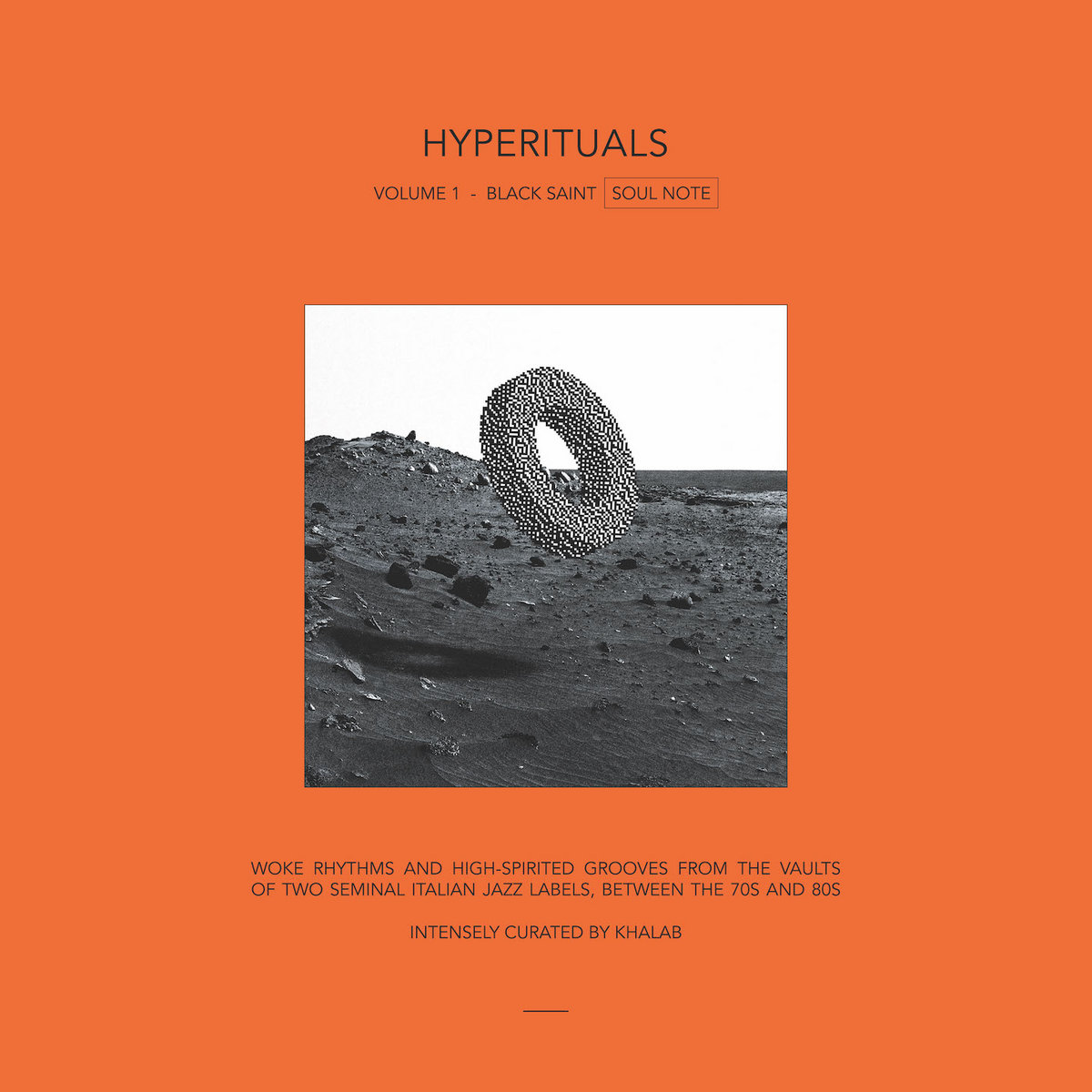
Woke rhythms and high-spirited grooves from the vaults of two seminal Italian jazz labels, between the 70s and 80s. Intensely curated by Khalab.
BUY
7″VINYL
Digital
A brand new Hyperituals compilation is ready to come out! Following the first volume (dedicated to the Soul Note catalogue, released in April 2022) the new double gatefold vinyl is entirely dedicated to the Black Saint catalogue.
The selection – focused on rhythms, grooves and Afrocentric traditions – blends moments in which the rhythmic aspect is powerfully explicit, with others in which the kinetic aspect dialogues on different levels with African American cultural contexts.
There is no shortage of instances where the sound links the present to Africa or references the most ancestral rituals.
Black Saint and Soul Note, two Italian sister labels based in Milan that, since the 1970s and throughout the 1980s, established themselves as two of the most important imprints for international jazz.
Founded respectively in 1975 by Giacomo Pellicciotti and in 1979 by Giovanni Bonandrini (to whom Pellicciotti sold Black Saint in 1977), Black Saint and Soul Note have represented a safe haven for incredible and brilliant artists who were unable to find their space elsewhere.
By combining jazz tradition with the political vanguard sentiment of the time, the two sister labels were able to press and produce more than five hundred records (still available today – the catalogue is now owned by CAM JAZZ), many of which are by some of the brightest names in creative jazz or the ‘avant-garde’ of the era.
Black Saint and Soul Note always placed the artists, their visions, and their music at the centre, giving them total freedom of creative expression. It is thanks to this constant, cutting-edge and meticulous commitment that today we have some of the shiniest musical gems by Sun Ra, Archie Shepp, Don Cherry, Max Roach, Anthony Braxton, David Murray, and many others. And it is this long list of jazz gods and idols that led the two labels to be recognized as the best in the world by critics, winning the DownBeat Critics Poll for Best Record Label for six years in a row, from 1984 to 1990, conquering the American market.
Hyperituals’ Black Saint universe is a colourful one, dotted with rhythmic galaxies in constant motion.
Entirely curated by Khalab – Raffaele Costantino, HJ’s founder and head of A&R – Hyperituals is a philological investigation that delves deeply into the musical influences and cultural roots of the Italian label.
The theme that runs through Hyperituals is the exploration of the possibilities of sound, rhythm, remix, and endless sampling. Inspiring listening, interpretation, and reinterpretation.
Hyperituals is an exercise in crate-digging that explores the past of some of the most important yet sometimes forgotten record labels and aims to bring to light music that is contemporary both in its sound and its message.
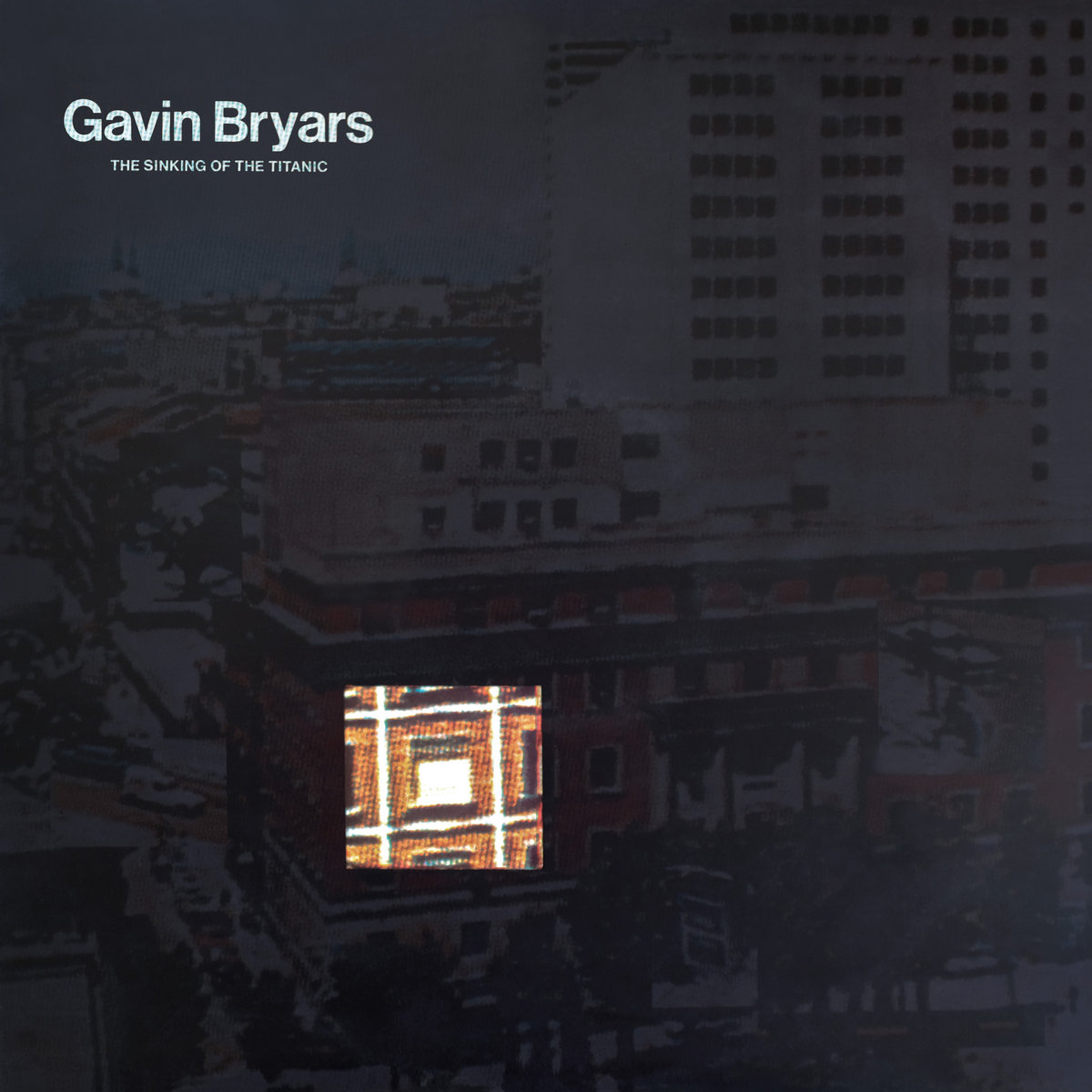
On April 14th 1912, the Titanic struck an iceberg at 11.40 p.m. in the North Atlantic, and sank at 2.20 a.m.on April 15th.
This piece is based wholly on the circumstances surrounding that event, and the equation of facts that emanate from it, in one direction or another. All the elements in the present recording, in published extracts from the piece, in other performances already given, are based on these considerations.
BUY
Digital
The initial starting point for the piece was the reported fact of the band having played a hymn tune as the ship went down, the lack of any report of their having stopped playing, combined with a number of other features of the disaster that are both reproducible and that ‘‘take the mind to other regions’’.
There has been some doubt and speculation about precisely what hymn the band played, and, while the piece reflects this doubt, some emphases are inevitable.
Harold Bride, the junior wireless officer, wrote his account in the New York Times, April 19th 1912:‘‘. . . From aft came the tunes of the band. It was a ragtime tune, I don’t know what. Phillips (the senior wireless officer) ran aft, and that was the last I ever saw of him alive . . . the ship was gradually turning on her nose – just like a duck that goes down for a dive. I had only one thing on my mind – to get away from the suction. The band was still playing. I guess all of the band went down.
They were playing ‘‘Autumn’’ then. I swam with all my might. I suppose I was 150 feet away when the Titanic on her nose, with her afterquarter sticking straight up in the air, began to settle slowly… the way the band kept playing was a noble thing. I heard it first while we were still working wireless, when there was a ragtime tune for us, and the last I saw of the band, when I was floating out in the sea with my lifebelt on, it was still on deck playing ‘‘Autumn’’. How they ever did it I cannot imagine.’’
‘‘Autumn’’, an Episcopal hymn, becomes a basic element of the music; from Bride’s evidence, this was the music they played from 2.15 to 2.20a.m., when the ship finally foundered. However, it has been supposed that the band played, at the end, ‘‘Nearer my God to Thee’’. One version of this, to the tune Bethany, was in Sankey and Moody’s ‘‘Sacred Songs and Solos’’ and, therefore, familiar to many passengers; it was also the basis of Karg-Elert’s pieces based on the incident. Another version, Horbury, was reproduced in the contemporary edition of Lloyd’s Weekly News, and was used at the Titanic Band Memorial Concert held on Empire Day, 1912 at the Royal Albert Hall, being orchestrated and conducted by Sir Henry Wood. However, Colonel Gracie, who left the ship at 2.18 a.m., emphasised that he didn’t hear the band play ‘‘Nearer my God to Thee’’, and insists that if they had played it, he ‘‘assuredly would have noticed it and regarded it as a tactless warning of immediate death to us all and one likely to create a panic that our special efforts were directed towards avoiding…’’ On the other hand, Sir Ronald Johnson points out that ‘‘Autumn’’, in the American hymn books, is set to 3 hymns ‘‘of great banality’’ and was unfamiliar to British churchgoers. (Astor, the American millionaire, himself an Episcopalian, may have requested it the hymn-singing during the previous evening had been chiefly of ‘requests’). However, the words would have been of little comfort in a crisis – one version begins ‘‘See the leaves about us falling’’ – and there would have been no mistaking it for ‘‘Nearer my God to Thee’’ (it was not necessarily mistaken for it – Gracie only knew of two passengers who were cited as authority for that hymn – nor is there any evidence that the words were ever sung or intended to be). Sir Ronald tells me that he believes that, while Bride heard the music correctly, the reporters misheard him (Bride had handled reception of messages rather than transmission at the end) and that what he said was that the band were playing ‘‘Aughton’’, a setting of ‘‘He Leadeth Me’’. Favouring connections made by reasons of phonetic similarity (cf. Brisset, Roussel, Duchamp), I favour ‘‘Aughton’’ as the most plausible alternative to ‘‘Autumn’’. The various possibilities and conjectures become incorporated into the piece, like footnotes, and this recorded version uses ‘‘Autumn’’ as the main body of the music, with ‘‘Aughton’’ also used (short extracts from ‘‘Nearer my God to Thee’’ are added sparingly). The hymns are arranged for the same ensemble as that on the ship viz. 3 violins, 2 celli, 1 double-bass (originally, Wallace Hartley 1st violin, Jock Hume 2nd violin, George Krins 3rd violin, Roger Bricoux 1st cello, J. W. Woodward 2nd cello, Fred Clarke double-bass). Since, after about 12.40 a.m., the band moved up from ‘A’ Deck to the exposed Boat Deck, it is unlikely that the two pianists Theodore Brailey and P. C. Taylor would have played since,(a) the highest deck with pianos was ‘A’ Deck, and lifts did not extend to Boat Deck,(b) by the time in question ‘A’ Deck was flooded and it is unlikely that the pianos would have been moved up to Boat Deck. After the development of wireless telegraphy, Marconi had suggested that sounds once generated never die, and hence music, once played, simply gets fainter, (as does any sound on this account). Indeed, it is retained more effectively in the more sound-efficient medium of water and is partly sealed in by the ‘ceiling’ effect of the coincidence of air and water. However dissipated this music becomes by its travelling up and down and across the North Atlantic, subject to variations, it is preserved to some extent in a less vulnerable state in the ship itself at a point 2,500 fathoms below the surface at about 41.46 N., 50.14 W. The size of the North Atlantic makes it suitable for such experiments with long-distance acoustics of the type carried out and demonstrated by Stephen Alcott and his six sons. The music, thus, descends with the ship as well as dissipating laterally, and is continued there for, to date, 63 years, a duration symbolically shortened in performance. (Dr. Faustroll was 63 when he deliberately drowned by sinking his skiff, removing the waterproof preparation by drawing his finger along the outside of the hull – Lady Cosmo Duff Gordon described the effect of the iceberg’s impact as being like a giant finger drawn along the ship). There the music continues until the point in the future when Douglas Woolley’s Titanic Salvage Company refloat the ship by the methods developed by Balas and Szaszbor. When and if that is done, the music comes to the surface with the ship and returns to its previous acoustic state, no longer affected by the effects of water at that depth. This conjectured refloating is included in the piece. Parallel with the ‘reality’ of the Titanic (and its treatment) is the fiction of a ‘ghost’ version (accorded the same treatment). In 1898, Morgan Robertson, author of, among other works, a set of sea-stories entitled ‘‘Spun Yarns’’, wrote about a ship called the Titan, the most luxurious ocean liner of its day and which was considered unsinkable. The ship was triple screw and could make 24.25 knots (same as the Titanic), its tonnage was 70,000 tons (Titanic 66,000), it was 800 feet long (Titanic 882.5), it struck an iceberg on its maiden voyage in the North Atlantic in April, it could carry about 3,000 people and only had room in its lifeboats for a proportion of them, as had the Titanic. It is possible, but unlikely, that Captain Smith may have performed ‘‘The Sinking of the Titan’’, in the same way that a ‘perfect’ realisation of ‘‘The Sinking of the Titanic’’ would contain all the materials of the original. Thus, there are, simultaneously, two pieces, one ‘ghosting’ the other with closely similar facts, both pieces existing in performance whether stated or not. This recording uses the hymn tune ‘‘Autumn’’ (partly subject to aquatic treatment), the hymn tune ‘‘Aughton’’, parts of the hymn tune Horbury, the ragtime tune ‘‘O You Beautiful Doll’’ (one of two ragtime pieces known to have been played during the period immediately prior to the hymn tune), Miss Hart, a survivor of the disaster, recalling certain memories of the music on the ship in conversation with the composer, a music box which plays ‘‘La Maxixe’’ (Miss Edith Russell amused a child in her lifeboat by playing this piece on a music box contained in a toy pig which produced the music when the tail was twisted). Although these sounds have been associated with the piece in several performances it would be a mistake to think of this sounding music as being the piece; there have been performances which use none of these elements. Some extracts from the extensive notes about the piece, which constitute a score, are published in the American music magazine Soundings (number 9, Summer 1975).
…La ’Pataphysique est la science…
Jesus’ Blood Never Failed Me Yet
The piece is for the pre-recorded voice of an old tramp, with added chamber orchestra. In 1970, a friend, Alan Power, was making a film about tramps in London, mainly around Euston, Waterloo and Elephant and Castle. While filming he made a number of tape-recordings, some synchronised with the film, others not, and he eventually brought them to me to help with mixing them. On the tapes were parts where tramps would suddenly break into song, sometimes slightly pathetic sentimental songs, sometimes loud operatic extracts. One of these songs was ‘‘Jesus’ Blood Never Failed Me Yet’’, part of which forms this piece. He gave me the tapes that he didn’t use in his film, and this song was among those tapes. When I played it through, the tramp’s singing was in tune, more or less, within his own singing and with my piano – far more than any of the other songs. He was not alcoholic, unlike all the other singers, and was very religious and talked at great length about his beliefs. I made a tape loop from part of his singing, a loop which resolved sufficiently for it to begin again without jarring, and this was transferred on to a full reel of tape, the duration being limited by the length of tape. I wrote out a simple chordal accompaniment at the piano and arranged this for a small ensemble to record at Bob Woolford’s Studio in September 1971 to be used as the soundtrack for a 16mm. film by Steve Dwoskin, in which an old man, filmed at very high speed, walks slowly towards the camera. (Strictly, the film was a visual track to the music, since the music came first). Performances with various additional instruments, sometimes using the film, have taken place at the Queen Elizabeth Hall, London; The Palais des Beaux-Arts, Brussels; Mills College, Berkeley, California; San Francisco Conservatory of Music, California; The Festival of Mixed-Media, Ghent; and for many of these performances extra instrumental parts were necessary if everyone were to be able to play. Finally, in 1974, the definitive score was written, a score in which reasonable substitutions may be made for various instruments and groups. The voice begins alone, slowly faded in, and gradually, group by group, instruments are added to the voice very slowly and sympathetically. Eventually all the instruments are playing and the piece fades away and finishes. In this performance, all the parts in the score are included and are in this order: The voice begins alone, then strings are added, then guitar and plucked bass, then woodwind (flute, clarinet, bass-clarinet, bassoon), then 4 French horns, then harp, then brass (2 trumpets, trombone, tuba), then oboe, then organ, and vibes. When the piece is played live, it is played in a restrained way, without pomp or show.
CREDITS
released December 1, 2023
‘‘THE SINKING OF THE TITANIC’’ Strings: The Cockpit Ensemble (directors Howard Rees and Howard Davidson) With John Nash, violin and Sandra Hill, double bass. Conducted by Gavin Bryars. Additional tapes using music played by the strings of the New Music Ensemble of San Francisco Conservatory of Music directed by John Adams, prepared at the studio of the Department of Physics, University College, Cardiff, with technical assistance of Keith Winter and Graham Naylor. Gavin Bryars, piano; Angela Bryars, music box; Miss Eva Hart, Spoken voice.
‘‘JESUS’ BLOOD NEVER FAILED ME YET’’ Orchestra consisting of The Cockpit Ensemble (directors Howard Rees and Howard Davidson); Derek Bailey, guitar; Michael Nyman, organ; John Nash, violin; John White, tuba; Sandra Hill, double bass. Conducted by Gavin Bryars.
The meeting of Alieu and Randomized Coffee gives light to this new project, in which the Roman duo tackles a production that skillfully links Mediterranean influence to ancestral Africa in a patchwork woven of typical African ethnic elements to those of house and electronica in a “groovy” body that enhances the classical side of the African country in a modern musical mood and rhythm.
BUY
12″ SINGLE VINYL
DIGITAL
The story tells about the day before an arranged marriage ceremony.
Masanneh is a handsome and well-known man in his village of the Mandinka Tribe, born and raised in the village of Kudang, near the river that flows through the entire country; the Gambia.
Many in the village believe him to be charismatic and generous, others believe him to be a venal materialist devoted to money. Masanneh decides to consult Cherno Jallow, a wise Marabout, to figure out how to deal with his future.
He therefore moves westward to the village of Bondali, in Foni, where before practicing his work as a skilled trader he talks to Landing Sawo, the district chief, from there he hears the sound of a Kora played by Jali, while across the road he sees a beautiful woman Mariama Gomez passing by.
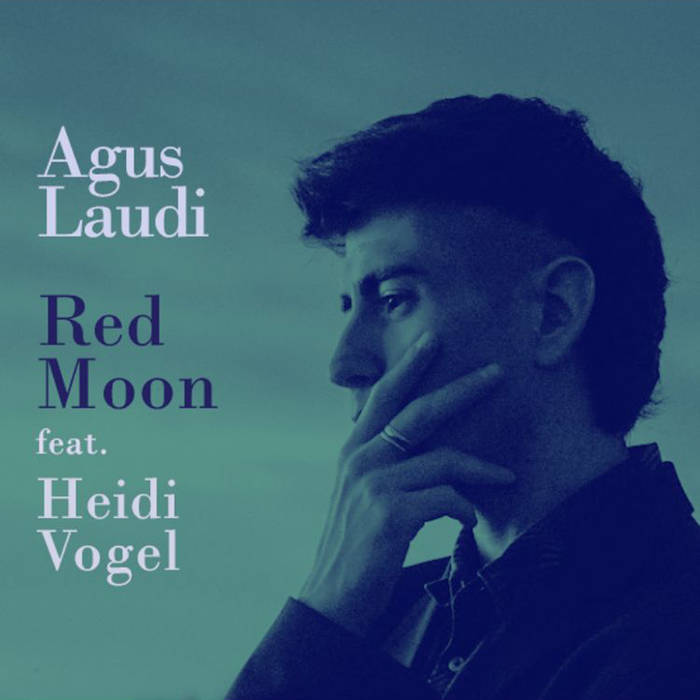
After his previous single ‘Novo Amanhecer’ in collaboration with Argentinian artist Zoe Gotusso – influenced by Nicola Conte’s sound in ‘Other Direction’ and by Thievery Corporation, Agus now offers us his new single featuring English singer Heidi Vogel – it is an explosive, very catchy jazz samba with a pressing sophisticated rhythmic sense.
BUY
A really good songs with unique and elegant aesthetic appeal.
Per fornire le migliori esperienze, utilizziamo tecnologie come i cookie per memorizzare e/o accedere alle informazioni del dispositivo. Il consenso a queste tecnologie ci permetterà di elaborare dati come il comportamento di navigazione o ID unici su questo sito. Non acconsentire o ritirare il consenso può influire negativamente su alcune caratteristiche e funzioni.
Funzionale
Always active
L'archiviazione tecnica o l'accesso sono strettamente necessari al fine legittimo di consentire l'uso di un servizio specifico esplicitamente richiesto dall'abbonato o dall'utente, o al solo scopo di effettuare la trasmissione di una comunicazione su una rete di comunicazione elettronica.
Preferenze
L'archiviazione tecnica o l'accesso sono necessari per lo scopo legittimo di memorizzare le preferenze che non sono richieste dall'abbonato o dall'utente.
Statistiche
L'archiviazione tecnica o l'accesso che viene utilizzato esclusivamente per scopi statistici.L'archiviazione tecnica o l'accesso che viene utilizzato esclusivamente per scopi statistici anonimi. Senza un mandato di comparizione, una conformità volontaria da parte del vostro Fornitore di Servizi Internet, o ulteriori registrazioni da parte di terzi, le informazioni memorizzate o recuperate per questo scopo da sole non possono di solito essere utilizzate per l'identificazione.
Marketing
L'archiviazione tecnica o l'accesso sono necessari per creare profili di utenti per inviare pubblicità, o per tracciare l'utente su un sito web o su diversi siti web per scopi di marketing simili.