After two years and a half, Pietro Santangelo (formerly Nu Genea sax player) and his PS5 ensemble are back to Hyperjazz Records with a brand new album: Echologia.
BUY
7″VINYL
Digital
‘Echologia’ draws inspiration from the concept of natural biodiversity as a metaphor for contamination, coexistence, and equilibrium. Just as biological agents contribute to the vitality of an ecosystem, seemingly distant musical languages become balancing forces within a fertile and flourishing sonic environment. In this context, multiculturalism evolves into true coexistence..
As in the previous ‘Unconscious Collective’ (Hyperjazz, 2021), suggestive saxophone textures intertwine on a solid rhythmic equilibrium and move naturally along an imaginary line highlighting the ancestral connection between Africa and the Mediterranean Sea.
In the background, the tribute to the earlier Jamaican dub masters with a strong use of vintage echoes in the mixing phase.
Album cover by Sabrina Cirillo is inspired by the myth of the nymph Echo, the Oread condemned by Juno to be able to express herself by repeating only the last words of the interlocutor, who died of pain due to the impossibility of communicating her love to Narcissus.
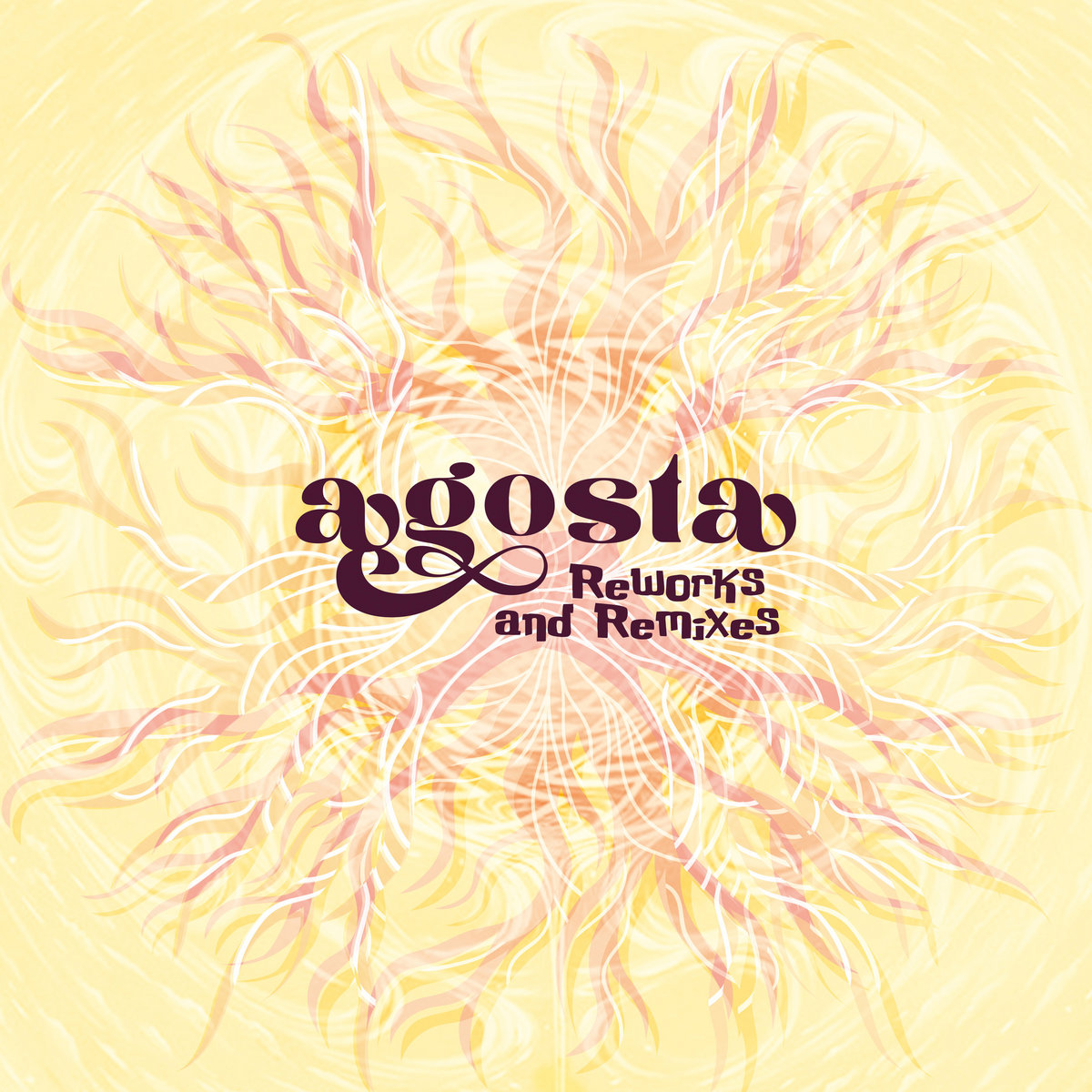
One year after his remarkable debut, Agosta—the enigmatic Catania-based musician/non-musician—returns with Reworks and Remixes.
This new album confidently stands apart from its predecessor, marked by a compelling concept: it was born entirely within the thriving electronic music scene unfolding around the slopes of Mount Etna.
BUY
For this project, Agosta brought together some of the most influential voices from Catania’s underground black electronic scene, inviting them to reinterpret selections from his debut album. The result is a reimagined sonic experience—an evocative blend of introspection, experimentation, and Mediterranean nuance.
From the contemplative house textures of Apple 65 and Lady G (Butterfly Agosta’s Rework) to AN-AN’s dub-tinged reworking of Varanni, which channels echoes of Grace Jones and Adrian Sherwood, each track emerges with renewed depth and direction.
Meanwhile, Galathea offers a darker, more psychedelic take on Three Chestnuts, steeped in classic trip-hop atmospheres.
There’s the Shaft-style swagger of Salvo Borrelli and Reverend James, the downbeat, dreamy pop of Cellars reimagined by Go.Soul.Map., and the tender, rain-soaked reinterpretation of Lady G by The Invisible Session—where spoken word poetry drifts into the rich textures of what was once dubbed nu-jazz.
Reworks and Remixes is as multifaceted as the artists behind it, each contributor bringing their own distinct vision, weight, and sonic language to the table.
And yet, the album holds together with striking cohesion. It’s unified by a shared philosophy: sound as both a physical presence and a cerebral experience. At its core, a warm, unmistakable Mediterranean essence permeates every beat, note, and echo.
The remix format offers fertile ground for exploration. These reinterpretations venture into new creative territory, bearing the unmistakable imprint of each remixer—their experience, aesthetics, and intuition—while maintaining a collective spirit. Perhaps the most defining trait of this project is its unshakable sense of place: a deep, living connection to Catania and the city’s storied club culture.
From legendary venues like Mercati Generali to iconic nights such as Piatto Forte, Ritetroit, and Nero Espresso, this scene shaped a generation of producers.
They cut their teeth here, nurtured by a mix of local roots and global currents—sharing booths and ideas with international trailblazers like Gilles Peterson and Rainer Trüby, and evolving through collaboration and cross-pollination.
This is more than just an album—it’s almost a manifesto. It marks not only a new beginning for Agosta but also serves as a document and celebration of a thriving local scene.
Through the artistic sensitivity of its contributors, it offers a sonic cartography of Catania—expanding its narrative, amplifying its voice.
With this project, Roberto Agosta steps into the role of curator and artistic director, guiding the listener through a deeply rooted yet forward-looking musical landscape. And with Reworks and Remixes as our compass, we’re already looking forward to where he’ll take us next.
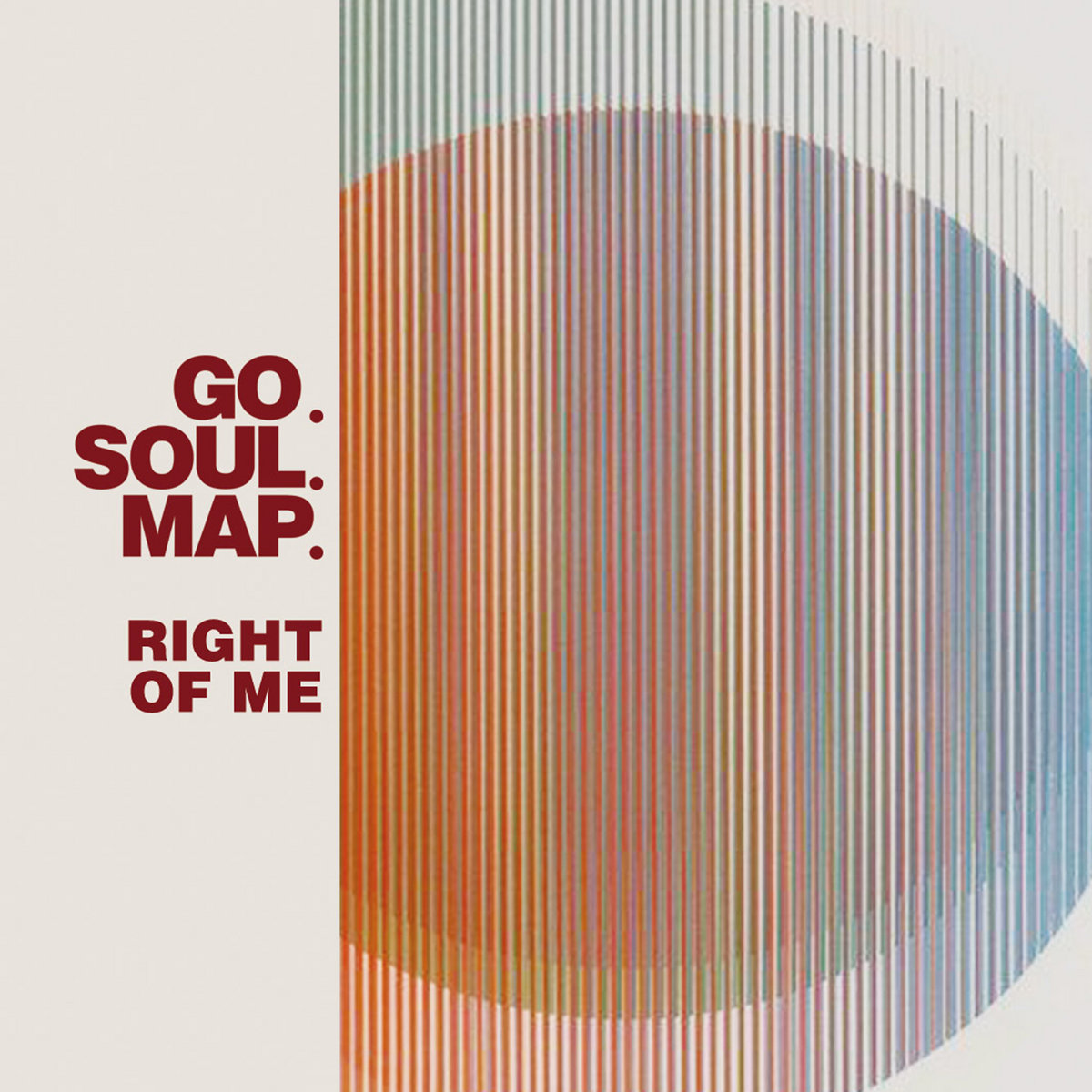
‘Right Of Me’ is an incandescent and refined excerpt, like the entire new concept of the album ‘Peaceful Sound For Broken Minds’ due out on Feb. 23rd 2024. The plan of Salvo Dub from Catania aka Go.Soul.Map does not stop here – we are in front of an artist with an exceptional creative phase, a hothouse of sparkling ideas that flow out in continuous streams like the lava of Etna in its full eruptive activity.
BUY
DIGITAL
As with ‘Pushing’, ‘Right Of Me’ is always presented in a Nu-disco key, super Dance in a formula full of Pop and Soul enriched by keyboard sounds. Salvo comments on how proud he was of this track, which is certainly the strongest track on the whole album, and it is no coincidence that it was chosen as the second single.
The performance and refined voice of Derane Obika complete the work, her lyrics touching a deep state that explores the relationship with one’s self and faith. In conclusion, we can say that in a world where artificial intelligence will only numb our creative stimuli, there is no shortage of creativity here and at the same time, more unique than rare, Go.Soul.Map. remains firmly anchored to its roots beyond passing fads in a space of pure simplicity and creative essence alongside its friend Derane Obika.
“Right Of Me” is a luminous and refined excerpt, representative of the entire concept behind the upcoming album Peaceful Sound For Broken Minds, set for release on February 28, 2024.
BUY
7″SINGLE VINYL
DIGITAL
The creative journey of Salvo Dub from Catania—aka Go.Soul.Map—doesn’t stop here. We are witnessing an artist in the midst of an exceptional creative phase, a veritable greenhouse of sparkling ideas that pour forth like the lava of Mount Etna in full eruption.
Much like Pushing, Right Of Me is rooted in a Nu-disco style—deeply danceable, rich with Pop and Soul influences, and elevated by lush keyboard textures. Salvo proudly describes this track as the most powerful on the entire album, which is why it was chosen as the second single.
The track is further enhanced by the elegant performance and nuanced vocals of Derane Obika, whose lyrics delve into profound emotional states, exploring the relationship between self and faith.
In conclusion, in a world where artificial intelligence often threatens to dull our creative impulses, Peaceful Sound For Broken Minds is a testament to unfiltered creativity. Go.Soul.Map. remains uniquely rooted in authenticity and simplicity, resisting fleeting trends while continuing a deep artistic dialogue with longtime collaborator and friend, Derane Obika.
Max Eastley graduated from Middlesex Polytechnic in 1972 with a degree in Sculpture. After completing a one year fellowship in the Light/ Sound department of Exeter College of Art, publishing a book on his work and exhibiting in Exeter, he returned to London where he contributed to the first edition of a series of books on New/Rediscovered musical instruments, the contributors to which were featured on I.T.V.’s ‘‘Aquarius’’.
BUY
Digital
While teaching Sculpture at North East London Polytechnic he completed a programme on work songs based on material from B.B.C. Archives to be broadcast in the future and is at present working on another programme on an aspect of his work concerning a newly invented Aerophone.
For the visual artist who attempts to use sound the problems are formidable. For example, sound has a relatively slow speed and so at a distance a sound separates from the movement that caused it, whereas light is of such a high frequency that for all practical purposes it is instantaneous.
There is the problem of materials. Some are visually fascinating while acoustically they are (as far as the human ear is concerned) inert. Conversely, if the composer should decide to attempt something which is sculptural he may find the inertia of the material he chooses too cumbersome to realise his conception. Lastly, the Musical Instrument maker, who has been aware of these problems for some time, finds the conflict between appearances and performance increasingly difficult to resolve as the technology of sound advances.
The work I am involved in is an attempt to resolve these problems. It is a synthesis of the simultaneous study of Kinetic Art, Music and Musical Instruments. These are my sources. What proceeds is neither one nor the other. My aim is perfect synthesis and emancipation of these elements into a new form.
David Toop
David Toop – born May 5, 1949 – Enfield, Middlesex.
The entire sequence of dance music included on one side of this disc is divided into three sections. The structure is as follows:
‘‘Do the Bathosphere with David and the Cetaceans” solo voice/David Toop. The Cetaceans/Chris Munro, Brian Eno, Phil Jones.
o come on and do the bathosphere o come on and do the bathosphere you know you can do the bathosphere if you would only hear hear about the bathosphere so open up your ears to the bathosphere you needn’t have any fear visions would appear you could be a seer if you would only learn to do the bathosphere so come on and hear about the bathosphere yes come on and hear about the bathosphere you won’t shed any tears when you’ve learned to do the bathosphere o won’t you do the bathosphere o won’t you do the bathosphere o won’t you do the bathosphere o won’t you hear about the bathosphere o won’t you hear about the bathosphere o won’t you hear hear about the bathosphere
‘‘Do the Bathosphere’’ written 1973/first performed for solo voice 24/9/73. Frequently performed in public – David Toop/voice + Paul Burwell/bamboo pan-trumpets. To continue the line whose peak may have been in Alvin Cash and the Crawlers.
‘‘The Divination of the Bowhead Whale’’ David Toop/prepared electric guitar + bowed chordophone. Frank Perry/3 Japanese resting bells. Paul Burwell/3 bass drums + large lorry hub + 2 string fiddle. Brian Eno/prepared bass guitar. Hugh Davies/grill harp.
‘‘Divination of the Bowhead Whale’’ written Spring 1975.
Concerning pitch as a function of time. Structured in 7 parts: before its beginning / after its ending / 3 slow moving blocks of sound/2 silences. Division was achieved by the means of signal gongs – the duration of silences determined according to the physical properties of these gongs. These silences may appear lengthy to the casual listener but in fact were brief. The extraordinary sustaining power of Frank Perry’s temple gongs, his acute hearing and the nature of studio acoustics ensured that the decay time prior to the silences was enormously long given the adoption of an acoustic struck instrument as signal device. The piece refers to the Bowhead Whale / mysticetus Linnaeus / whose song occurs within an approximate frequency range of 5 to 500 Hz. Extremes of frequency are of interest as examples of a significantly perceptible relationship of time to human physiology.
”The music of Korea has proved continuously fascinating in this respect” – the basis of music as an inescapably time-based medium being asserted throughout many cultural forms, whether Court Music, with its extremely attenuated melodic lines and curious percussion measures; Kayageum / Changgo duets with lightning fast rhythmic responses between two performers over extended semi–improvisations or Buddhist Music – words sung very slowly, climbing through strange and moving melismas.
Five stringed instruments are used in the piece – two of them orthodox 20th century instruments / prepared by attaching crocodile clips to the strings – a method of masking discovered in 1973 / and three unorthodox instruments.
The bowed chordophone has a barrel resonator with paper membrane. A string can then be stretched from the centre of the membrane to any negotiable length. This can be bowed to produce low pitches – tightening the string produces a dramatic glissando – fairly similar in principle and effect to the Indian Khamak. The two-string fiddle is an instrument made from bamboo by Paul Burwell. The strings are tuned in unison.
The grill harp was invented by Hugh Davies. It consist of a small metal grill. A single string is stretched from foot to grill / another single string is stretched from grill to hand / the whole is held in tension / the upper string is rubbed by the free hand.
The piece exists as the first in a series of statements which run parallel to an investigation of communications within restricted frequency bands. Such communications include the signals of bats, human whistle languages and speech surrogates and the poignant songs of the Bowhead Whale.
‘‘The bearded seal nets the ghost of the grey seal they invoke the australian frogs the chairs story the chairs story the chairs story’’
David Toop/solo voice + flutes + water.
the road of dreams the music of the rocks the echo beach the shifting of the sands the chairs story the chairs story the chairs story
The song ‘‘The Chairs Story’’was written at some point in time between 1970 and 1972 and has been performed in public frequently and on radio once since that time.
The piece on this disc which utilises this song is structured according to three repetitions, each repetition being a transformation of the skeleton.
The flutes were all made by myself. In the first transformation they are chosen for their relative high pitch / transverse and end-blown flutes / ; in the second for their percussive quality as well as their deep but elusive fundamental pitches / stopped end-blown flutes / ; in the third for their low pitch/ notched end-blown and duct flutes played into water / .
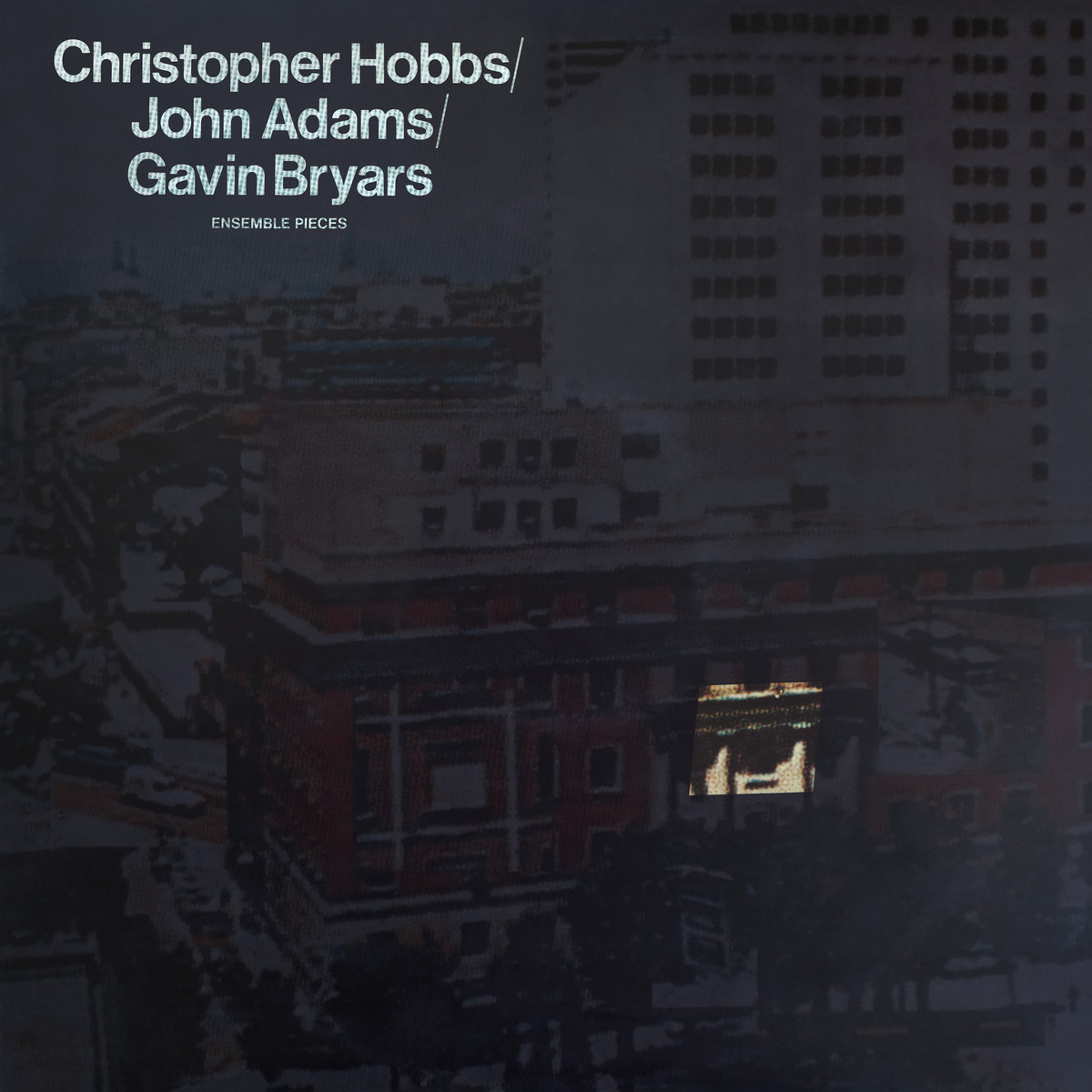
by Christopher Hobbs, John Adams and Gavin Bryars – DIALOGO
‘‘Aran’’ and ‘‘McCrimmon Will Never Return’’ date from the period 1970-72, and were written for the Promenade Theatre Orchestra, a group started by White, consisting of 4 performers; White, Hobbs, Hugh Shrapnel and Alec Hill.
BUY
12″ Vinyl
Digital
‘‘Aran’’was written at a time when the PTO was beginning to combine the sounds of reed organs and toy pianos, the original instruments of the group, with some newly-acquired percussion instruments. The note-to-note procedure of the piece was determined by random means, in the hope of producing a gentle unpredictability in the final result. It was hoped that the whole would be grittily resonant. This recorded version, for 12 performers, is generally more soft-centred than the original.
American Standard Although the instrumentation of the piece is not specified, an ideal group would be similar to that which performed this version, recorded at the first performance of the piece in March 1973. It is played by the New Music Ensemble of the San Francisco Conservatory of Music, directed by John Adams, the composer, and the instruments used here are: Flute, clarinet, clarinet (doubling bass-clarinet), clarinet (doubling bass-drum), tuba, percussion (trap set), violin, 2 violas, cello, double-bass, and harp. A conductor is not necessary for performance, since the arrangement and distribution of parts depends on what instruments are available, and ensemble problems that arise are ‘‘to be worked out in standard American fashion: proposal, debate and vote’’. Extra materials, that anyone making a version considers appropriate, may be used in performance in various forms whether film, tape, video, speech, mime, dance etc. Each section of this performance has at least one example of the use of ‘‘extra materials’’. The piece is in 3 parts, each separately performable, and separately titled: 1. John Philip Sousa The use of a steady, insistent pulse makes the title’s derivation quite clear; the pulse is given by a bass drum and other instruments have constant pitches which are departed from and returned to. As with all 3 pieces, the dynamics are restrained and undramatic, with the exception of the ‘‘extra material’’ – a crisp snare-drum roll that both sets the tone and gives a dramatic touch that is not present anywhere else. This is not in the score. 2. Christian Zeal and Activity The main body of the music consists of a series of long held notes, very consonant, in 4 parts which are occasionally synchronised to give unified chords. The instruments are divided into 4 groups according to their pitch ranges, with at least one sustaining instrument in a group, each group having a leader who cues movement from one note to the next. During this piece, the ‘‘extra material’’ consists of a tape-recording of a radio talk-show. 3. Sentimentals This is the most melodic piece of the 3 and the one which involves the greatest range of variation, quoting extensively from Duke Ellington’s ‘‘Sophisticated Lady’’.The gentle swing of the trap set, that is added during the piece, is again not included in the score, and its presence gives the sound a distinctively Californian feel, close to that of the Beach Boys, or Hollywood studio bands.The curious ending is an ironic affirmation of the maudlin chromaticism of the Ellington piece which generates the music.
McCrimmon Will Never Return ‘‘McCrimmon Will Never Return’’ stems from a temporary interest in Piobaireachd (Pibroch), the most highly developed form of Scottish bagpipe music. The melody of the title has several variants, which are played simultaneously on 4 reed organs. The tempo is sufficiently slow that the characteristic skirls or flourishes in the music become audible as individual notes.
1, 2, 1-2-3-4 The piece is for instrumentalists/vocalists, each wearing headphones connected to a portable cassette machine. Each performer hears only the music in his headphones, music which contains ‘‘parts’’for his instrument or voice, and he plays, along with the cassette, his own instrumental part. His ability to reproduce this part depends on how familiar he is with what he hears, and this can range from careful practice over a period of weeks with his cassette to an immediate response from a first or second hearing. The present recording, to some extent, contains elements of these two extremes: a few players had played the piece on other occasions (at least one of which used the same material as is used on this recording), while others became acquainted with it for the first time in the recording studio. Each performer plays the‘‘part’’that corresponds to his instrument.Thus, if the music be jazz, a bassist is likely to play more than, say, a violinist. In the case of a bassist hearing jazz (and, hence, usually a bass) on his headphones, he would attempt to play, as best he can, the bass-line in the headphones such that there is an intended one-to-one relationship between what he plays and what he hears in the headphones. He may try his part several times beforehand, or he may choose to busk ‘‘on the night’’, like the accompanist in cabaret who is told, in the middle of the act on stage, that there are no parts for the next number but that it is ‘‘Happy Streets and Paper Rainbows in D flat, 1, 2, 1-2-3-4’’ (and his entry must be prompt, even to the extent of ‘‘inventing’’ an eight-bar introduction). In this performance, all the players have identical material on their cassettes, though each was recorded individually and not copied simultaneously, and their performance reflects a number of variables that occur: the starting point of the music on the cassettes is not precise (but the click of the machines switching on, however, is); the cassettes may not be all running at the same speed due to the uneven quality of the different machines, the state of their batteries and so on, and this, in turn, affects both the duration and key of the piece; players vary in their ability to ‘‘shadow’’ material (i.e. to simultaneously hear and reproduce); players, in this recording, vary in their familiarity with the material. The material itself, however, is perfectly homogeneous and the dislocations that occur do not destroy this. The piece was originally written for a series of concerts organised by John White and is, amiably, dedicated to him.
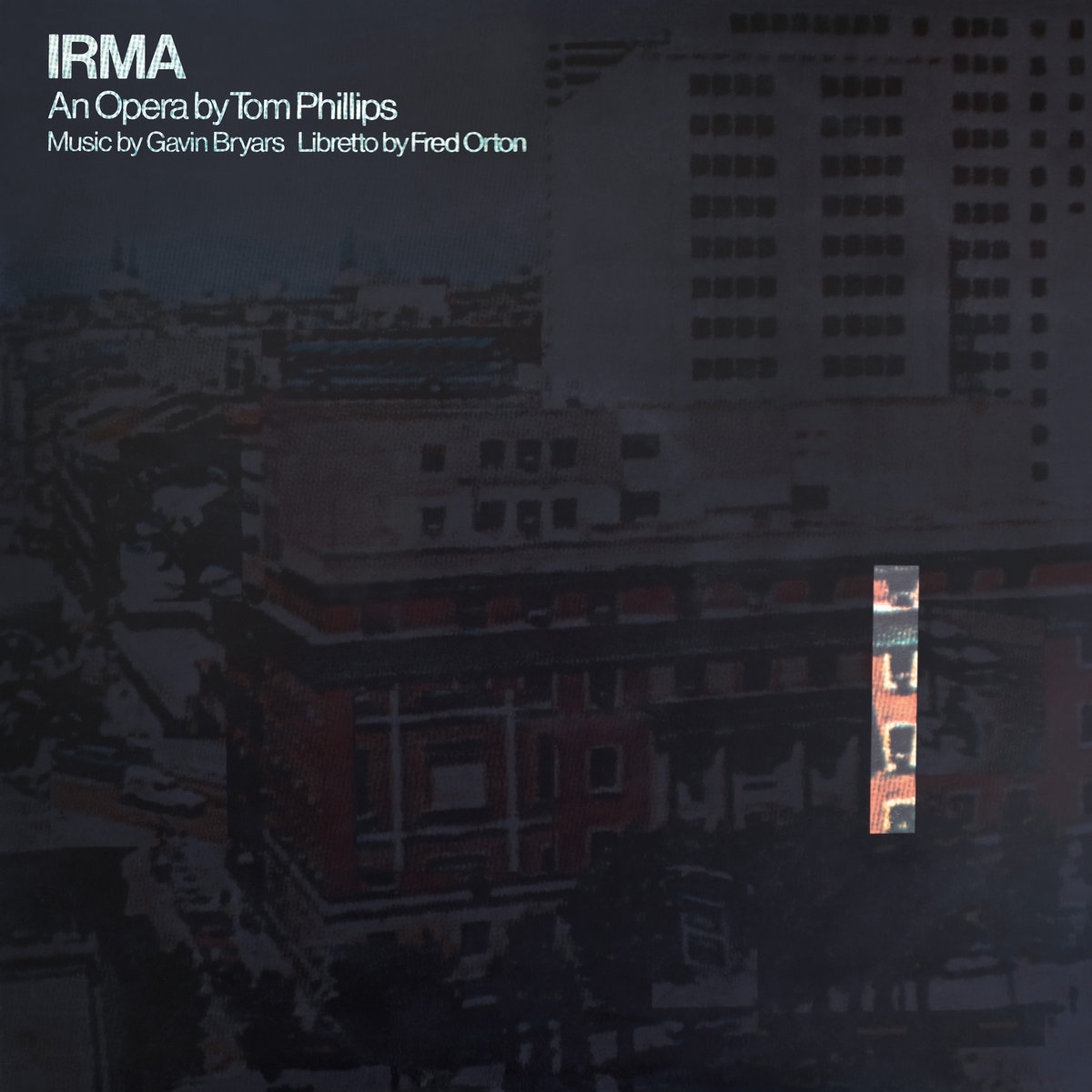
On composing Tom Phillips’ Irma In February and March of 1977, for Brian Eno’s Obscure Records, I made a version of Irma. The following notes on the piece arise out of that involvement and try to show how the piece can be made into a performance state.
BUY
12″ Vinyl
Digital
Irma is a curious score – it is printed on a single sheet 50cms x 50cms. The notation consists of fragments from Tom’s continuing treatment of the victorian novel by W. H. Mallock, which he calls A Humument, and utilises those short verbal fragments that refer to either ‘‘libretto’’, ‘‘decor and mise-en-scène’’ or ‘‘sounds’’. These 3 categories are arranged in separate sections on the square sheet with, at the bottom, a line of stave notation.
At first sight it looks like a piece of indeterminate music – clearly there has to be some preparatory work done before it is performable and no-one would venture to perform directly from the score – but if it is approached in this spirit, like realising a piece by John Cage or Morton Feldman written during the 1950’s, the sounding results are either largely of a documentary interest, or rely entirely on the gifted performer to make into a coherent sounding whole.
True, one could say the same thing for a piece by Cage, such as Variations I, but there the performer is given a number of precise parameters of sound within which he should work, whereas Irma needs to be re-composed rather than realised. If the distinction between ‘‘composing’’ and ‘‘realising’’ is overlooked, and if only the materials present in the notation are used, then the result is likely to be impoverished and it is clear that, looked at in isolation as a self-contained work, the score is notationally very thin.
So one either produces an impoverished piece of sounding music, or one takes the responsibility to look further. Tom does not say explicitly that one must go beyond Irma into the rest of his work, but he does say that one has to go outside the piece. On the score he writes: ‘‘Perhaps to treat the indications here given as if they were the only surviving fragments of an ancient opera, or fragments of eye and ear witnesses’ accounts of such, and given no knowledge of performance tradition of the time, to reconstruct a hypothetical whole which would accommodate them economically, would be an appropriate basis of approach to a production.’’
So, try to put it back together and try to fill in all the gaps between these fragments. This approach, which, incidentally coincides with an interest in such procedures within my own work, seems to be the most suitable. If the ‘‘composer’’ uses the sorts of methods that Tom evidently uses in producing pictures, in making A Humument (of which Irma is a part), and if he uses the notations of Irma as clues to lead him into whatever area seems likely to yield rich results, then a much more satisfactory outcome is likely – satisfactory both in terms of the quality of the sounding material and in terms of consistency with the rest of Tom’s oeuvre.
There are clearly many ways in which the various fragments of verbal notation can be used. One fruitful way was to take each of the fragments as the notes of, say, a critic at the only performance of the work (in a hypothetical past), perhaps jotted down on the back of an envelope (then torn into fragments in a rage, or through frustration at some element in the piece?
Make the piece inadequate in some way?!). These elements, then, would have been memorable for some reason or other, or used as an aide-memoire to recall something else (even something outside the work). The elements could have occurred at evenly-spaced intervals throughout the performance, they may have all been featured in some way (loudly, as solos), they may have been the worst parts (being retained to damn the piece in a subsequent review, since lost or never written – the composer got wind of the review and murdered the critic, retaining the fragments as the only link with the crime. . .).
On the other hand they could be used as discrete musical units quite separate from the main body of the work, which has to be looked for elsewhere. Whatever solution, or combination of solutions, is found it is evident that the composer and librettist are more or less obliged to move outside the work itself i.e. outside the printed score.
(One of the original ideas I had, which was not very practical, was to see if I could use another opera called Irma. A possibility was one written by H. J. Banawitz first performed in 1885, which would have had the right period in terms of the connection with the W. H. Mallock original. This seems to have had few performances, perhaps only one, and seems to have disappeared. I thought of looking for the manuscript, treating it in the same way as Tom had treated the Mallock novel, and making a sort of ‘‘musical Humument’’ out of it.
While that seemed to have some intellectual sympathy with Tom’s work, it might not have sounded anything like an opera, and it did seem to me that one of the notions of Irma is that it is conventional to some degree. Indeed, while much of Tom’s musical work lies within the field of experimental music and graphic notation, his musical taste is conservative, and the greater part of the musical references in the main body of his work are to past, and historically respectable, composers like Brahms, Mozart, Fux, Scarlatti and so on.)
The sources that were used, then, in making the piece apart from the score itself involved the following. I obtained the volumes of A Humument and noted all connection with music, with the role of Irma, and with the possible narrative; I looked at all the prints of Ein Deutsches Requiem after Brahms, which use elements from the Humument and refer directly to a musical work; I went through the catalogue of Tom’s work (Works. Texts to 1974); I went through Trailer, which uses the Humument, in fact a spin off from the main work; I went through all the other pieces of music that he has written to see if they could be used in any way; and I checked as many paintings/prints that I could which had a direct or indirect connection with either A Humument, Irma or with music.
The painting The Quest for Irma (1973) which shows her in back view looking out to sea gave much information. It is the only portrait of her and she appears even here as anonymous, or rather, faceless. It gives a marine setting for the work (though since at least two pieces of music that I have written deal, to some degree, with marine incidents it might be argued that I might have been better off avoiding such a reference, but it is very blatant). She is looking out to sea from the Dorset coast and this attitude seems to be characteristic of her behaviour: ‘‘I tell you. . . that’s Irma herself. . . watching the waves fall. . . repeating certain sorts of verse. . .’’ So here we have an elusive heroine, obsessively watching the sea off the Dorset coast, given to repetition.
Further checks within the Humument revealed a spate of marine references: ‘‘boat of dreams. . . lost on rocks’’; ‘‘the sad horizon of sea, hours she spent with her sadness on the beach’’; ‘‘see, see, the things. . . the things from the changed sea’’; ‘‘a cruise in an opium clipper’’; ‘‘marine engines and boilers’’; ‘‘ten years’ travel and sport in foreign lands’’; ‘‘a certain light flashed. . . among the eastern clouds’’; ‘‘sinking lights. . .’’ and so on. On the other hand, she is not in mourning since she wears a bright red dress. One page of A Humument is almost a summary of the feeling of Irma and is certainly one that I tried to emulate. ‘‘. . .
The whole history of it is so vague. . . eagerly, gradually the words that I heard I put aside as an opera, an insufficient one; still organ for what – me, me. . . I can’t quite tell. hardly books. . . it was the libretto of the music, of the music – I can’t tell. . . I can’t tell – but all was for the same thing to capture in drawing, and to express in music, thought and study. . . the loss. . . the least important. . . moon I myself am myself in search of an object for love? way? Yes and no – enter myself. . . associating me and me. It made me within me some mystery. . .’’
Other pages give more precise information about particular sounds, rhythms, timbres and so on. The instrumentation was, to a large extent, governed by the references to musical instruments that I found in all these sources. ‘‘Tube’’ suggested tuba. The piano is mentioned many times, especially in connection with John Tilbury. The gong is specified – ‘‘suddenly a gong in series’’ – which also gave me the whole of a short percussion interlude between the second and third sections of the work.
Strings were suggested by a phrase ‘‘the history viola’’ occurring in A Humument and this gave me a reason to feature the viola in some way, in fact using it in unison with the female voice, identifying the viola with the title of the opera. The fact of having strings is such a convention of normal orchestral scoring that it would really have needed a positive clue to the contrary to have excluded them, bearing in mind the relationship of the piece to musical convention. I used the tuned percussion, and especially metallic instruments, from certain onomatopaeic syllables, like ‘‘ting’’, ‘‘ping’’, ‘‘ding’’ which I had originally considered using as a chorus of instrumental imitations, but decided ultimately to use the instruments themselves.
Two of the prints from Ein Deutsches Requiem after Brahms gave me a great deal of material for the second section of the opera, a slow duet between the two main characters. Print number 5 shows a number of parasols, both closed and open, and has the legend ‘‘. . . a sound was given up’’ taken from A Humument. That particular picture suggested itself since there is, within both the score of Irma and within the published Humument a fragment which reads ‘‘the first parasol sound’’, with the addition, in Irma, of ‘‘f, f’’ indicating loud.
From the text of the Requiem printed on the picture, I could find the precise section of music in the Brahms original which consists of a solo for trombone (in the score I use baritone horn for its greater flexibility and ease of pitching, but it uses the same range, and has the added advantage of resembling the French Horn, an instrument more closely associated with noble operatic melodies.). The ‘‘parasol sound’’, then, indicated that I should use that particular instrument. What it plays came from another source, from the score of Irma. which gives ‘‘quiet, high, intonation divine. . .’’ and ‘‘. . . drops the tone . . . various phrases. . .’’ all of which enabled me to have that particular instrument playing, with “divine intonation’’, a long melodic line consisting of a descending stepwise chromatic scale from top E down an octave, but very elongated.
The other use of the Requiem was for the other half of the slow section, and used the following print, number 6, which refers to a sequence of rather chromatic chords in the original which I used as fragments, like the Irma score, inserting chords of my own between groups of those by Brahms to make a new sequence. So the whole of the second section uses references to the Brahms Requiem – in the first half to the harmonic content (vertical), in the second half to the melodic line (horizontal). The last section of the piece, a chorus ‘‘Love is help, mate’’ uses a page of A Humument that is dedicated to Morton Feldman, though the actual results bear no relation to Feldman’s music as such. What I did with that page was to look through some of Feldman’s music to see if there was anything in it that was consistent with the way that I was approaching the score of Irma.
It occurred to me to use a vocal piece for something that would be vocal within Irma and since Tom had dedicated another page to Christian Wolff – in fact a page of Trailer – and since Wolff and Feldman were close associates with Cage in the 1950’s, I used a piece called Christian Wolff in Cambridge (in spite of the fact that Tom had attended Oxford, and the Cambridge here refers to Harvard). This is a wordless choral piece which is hummed – and I used a lot of humming in the score, often as a means of separating discrete images – and consists of mildly dissonant chords. There were, however, one or two more consonant ones and I omitted those which sounded like ‘‘modern music’’, and so was left with one or two chords that I used, along with others interjected to produce a smooth flow, as the accompaniment to the melody of ‘‘Love is help mate’’.
The addition of other chords was necessary because of the static quality of Feldman’s piece in which each chord is an isolated entity, and this mirrored what I was doing, on a larger scale, with the whole of Irma; taking isolated fragments and finding ways of reassembling them into a continuous whole. It could be said that I was doing to Feldman what Tom had done to Mallock since each of us extracted from a body of material what was needed for a particular circumstance, though my extraction was a good deal more cursory. The melody that this accompanies comes from a number of sources.
One of these is the stave notation and references to specific notes on Irma itself – about 60% of the notes in the melody – the rest being added by myself. One of the ideas for this came from Eric Sams’ researches into the ciphers in Schumann’s music, and in particular from the fact that he originally found a clue to the cipher by finding 5-note melodic phrases in which the 1st, 3rd and 5th notes were C-A-A (Schumann’s wife was called CLARA) and this gave the possibility of finding what L and R became in the musical code, and thence other possible letters. Using this notion, using the notes given by Irma, and inserting between them other notes, the melodic lines are composed by myself but taking as a starting point the notation of Irma. The stave notation at the bottom of the score I found more usable in this way, and also as bass-lines, in transposition, rather than as originally given.
There are, obviously, some very direct references in the score, and it is the presence of these that ensure a very eclectic result: references like ‘‘the Ring’’, ‘‘the Emperor’’, ‘‘the International’’. The first of these, allied to a notation that refers to many ‘‘s’s’’ (German for E flat) suggested the opening of the Rheingold. The second, ‘‘Emperor’’, could have been a number of references – the ‘‘Emperor’’ Waltz (Strauss), the ‘‘Emperor’’ Concerto (Beethoven), the ‘‘Emperor’’ Quartet (Haydn) and so on. In the event I used the last two, and toyed with the idea of using the source for Haydn’s ‘‘Emperor’’ Quartet viz. his ‘‘Emperor Hymn’’ which became the Austrian national anthem, and which was, in its turn taken from a Croatian folk tune. I considered omitting all the musical references and only using the words of this latter ‘‘Vjutro rano se ja stanem Mal pred zorom’’ – and relished the fact that I would have been injecting something with precise semantic value, though one which I did not understand, but in the end omitted it for reasons of pronunciation difficulty.
With ‘‘the International’’, I was delighted that it was misspelt (Internationale) and this made of it a lipogram (like the Ellery Queen story that omits the letter ‘‘t’’) and so I quoted the music leaving out the note ‘‘e’’. I had also considered the idea of the lipogram in another context. The original of A Humument is the Victorian novel A Human Document which leaves behind the letters AN DOC, and this gives a lipogrammatic anagram of NO ADC, that is, to avoid the notes A D and C in the piece as a whole. This seemed to be excessive, however, since it would have effectively ruled out one of the two vowels available in musical cryptography, and they are not easy to come by.
Gavin Bryars (extract from an article written for Margins magazine, U.S.A.)
The Machines, which date from the period 1967-1972 represent a departure from the more traditionally “narrative” nature of the rest of my pieces. I use the word Machine to define a consistent process governing a series of musical actions within a particular sound world and, by extension, the listener’s perception thereof.
BUY
12″ VINYL
Digital
One might thus regard the Welsh Rarebit as a Machine in which a process is applied to the conditioning and perception of the world of bread and cheese.
Autumn Countdown Machine presents the guaranteed dis-simultaneity of six pairs of bass melody instruments, each conducted by a percussionist playing in time with, and making minor adjustments to the setting of a bell-metronome.
Son of Gothic Chord presents four keyboard players’ mobilisation of a sequential chord progression rising through the span of an octave.
Jews Harp Machine presents various permutations of the articulations “Ging, Gang, Gong,Gung, Ho!”
Drinking and Hooting Machine presents some observations on the world of bottles and their non-percussive musical potential. The effect of this piece has been compared to that of a large aviary full of owls all practising very slow descending scales.
John White, March 1976
THE SQUIRREL AND THE RICKETTY RACKETTY BRIDGE
The piece, for one player of two guitars, was written at the request of Derek Bailey, the jazz guitarist, in 1971.
I had worked closely with Bailey from 1963-6 in and around Sheffield as a member of a group which included Tony Oxley on drums and myself on double-bass.
Since that time, I have lost all interest in jazz, and in improvisation, and since Bailey was involved in both I wrote a piece which uses a technique which Bailey would be unlikely to have evolved in his playing.
The two guitars are played simultaneously, each one lying flat on its back, and they are arranged side by side so that the two fingerboards can be played with the fingers hammering down on them, like two keyboards. In addition, the score contains a number of ironic references to jazz and to its critical literature – short texts added to the ‘musical’ notations, somewhat in the spirit of Erik Satie, involving the performer in a hypothetical dialogue with the composer using fragments culled from particularly banal pieces of jazz criticism e.g. “ ‘there is an area up here’, holding his hand above his head, palm down,’ where musical categories do not exist.’ ”.
The left hand of the player moves at an even pulse, like the walking jazz bass, at a tempo “between Lady is a Tramp” as a medium bounce, and Cherokee as an embarrassment to lesser, and more intrepid, musicians”, while the right hand punctuates this with short notes, like a highly selective, or extremely lazy, trumpet soloist.
The title involves an oblique pun to do with the nut of the guitar, the guitar’s bridge, the faint noise of the music in between – that each attack gives two pitches rather than one – and an English children’s song about Billy Goat Gruff. Derek Bailey recorded the piece on Incus Records in 1971, and this new version is a multiple one, four players on eight guitars, in which each player uses a pair of guitars which are characteristically different from those used by the others.
Originally issued between 1975 and 1978, nearly 50 years on the output of Obscure remains radically forward-thinking – offering glimpses of a future yet to be fully seen – and amounts to one of the most important, influential, and creatively accomplished album series ever conceived.
Co-curated by Eno and the composers Gavin Bryars and Michael Nyman – issuing the recording debuts of Bryars, Nyman, John Adams, Christopher Hobbs, David Toop, Max Eastley, Jan Steele, Simon Jeffes / The Penguin Café Orchestra, and Harold Budd, in addition to important works by John Cage, Tom Phillips, and John White – Obscure’s collective output is a groundbreaking landmark in the histories of Minimalism, modern composition, and Experimental music, and laid much of the groundwork for the soon to emerge movement of Ambient music.
Illuminating the remarkable, and largely otherwise undocumented, creative ferment within and between the British and American scenes of experimental music during the mid to late 1970s, this collection – made in full collaboration with all of the composers or their estates – contains the entire 10 album output of Obscure, the majority of which have been out of print for years, with a number having never received a CD reissue.
Offering each of Obscure’s albums, completely remastered and housed in faithful replicas of their original covers and liner notes, as well as a 130-page booklet for CD-BOX SET and 80-page book (LP dimension) for LP-BOX SET, filled with rare photos, archival material and texts by – among others – Gavin Bryars, Bradford Bailey, David Toop, Max Eastley, Richard Bernas, and Tom Recchion, this historic collection marks the first time this seminal series has received a complete CD and LP repress.
Behind the alias GO.SOUL.MAP.is Salvo ‘Dub’, one of the most authentic and sensitive talents—not only artistically—in Catania’s contemporary music scene. Over the past decade, he has played a vital role under various names and capacities, serving as a key figure and indispensable pillar of this vibrant community.
BUY
7″SINGLE VINYL
DIGITAL
The debut album of this project is preceded by two preview tracks, to be released both digitally and on 7” / 45 RPM vinyl.
The lead single, ‘Pushing’, is an explosive Nu-Disco track that fuses modern energy with vintage roots. Its production features warm, expressive keyboard tones rich in 70s and 80s Funk and Soul influences, all wrapped in a Disco-Pop vibe that makes it perfectly suited for radio play.
The track features a stellar vocal performance by Derane Obika of Living Sounds. A Londoner of Nigerian descent, Derane is not only an exceptional vocalist but also the songwriter behind both the melody and lyrics. The song unfolds like a dialogue between an imaginary narrator and their spiritual guide, navigating the labyrinth of life.
The B-side of the 45 features an exclusive instrumental version of ‘Back in the Underwater‘—a track that blends Hip-Pop grooves with cinematic atmospheres. (The vocal version, performed by Reiwa Pia, will be included on the full album.)
Per fornire le migliori esperienze, utilizziamo tecnologie come i cookie per memorizzare e/o accedere alle informazioni del dispositivo. Il consenso a queste tecnologie ci permetterà di elaborare dati come il comportamento di navigazione o ID unici su questo sito. Non acconsentire o ritirare il consenso può influire negativamente su alcune caratteristiche e funzioni.
Funzionale
Always active
L'archiviazione tecnica o l'accesso sono strettamente necessari al fine legittimo di consentire l'uso di un servizio specifico esplicitamente richiesto dall'abbonato o dall'utente, o al solo scopo di effettuare la trasmissione di una comunicazione su una rete di comunicazione elettronica.
Preferenze
L'archiviazione tecnica o l'accesso sono necessari per lo scopo legittimo di memorizzare le preferenze che non sono richieste dall'abbonato o dall'utente.
Statistiche
L'archiviazione tecnica o l'accesso che viene utilizzato esclusivamente per scopi statistici.L'archiviazione tecnica o l'accesso che viene utilizzato esclusivamente per scopi statistici anonimi. Senza un mandato di comparizione, una conformità volontaria da parte del vostro Fornitore di Servizi Internet, o ulteriori registrazioni da parte di terzi, le informazioni memorizzate o recuperate per questo scopo da sole non possono di solito essere utilizzate per l'identificazione.
Marketing
L'archiviazione tecnica o l'accesso sono necessari per creare profili di utenti per inviare pubblicità, o per tracciare l'utente su un sito web o su diversi siti web per scopi di marketing simili.