First emerging during the mid 1950s, saxophonist and composer, Steve Lacy (1934 – 2004), has long been regarded as one of the most important contributors to 20th Century musical canon, producing groundbreaking records with Cecil Taylor, Don Cherry, Thelonious Monk, Kenny Burrell, The Jazz Composer’s Orchestra, Alan Silva, Roswell Rudd, Globe Unity Orchestra, ICP Orchestra, Miles Davis, and numerous others. An early adopter of free improvisation and experimental forms of jazz, despite his incredible catalog of collaborations, it is Lacy’s work as a solo artist and band leader that towers above the rest.
BUY
12″ LP VINYL
DIGITAL
Released in 1977, Straws encounters Lacy more than two decades into his professional career, brimming with confidence, versatility, and at the top of his game, building on the back of an incredibly prolific period of recording that grew from his move to Paris in 1970, where he remained for the bulk of his remaining years. The album, sparse and visionary, features six individual works – two solo pieces, two with celeste accompaniment, and two tape collages – dedicated to figures from various disciples of the arts, Brion Gysin, Janis Joplin, Art Tatum, Marilyn Monroe, Igor Stravinsky, and his wife, the singer Irene Aebi. Easily among the most adventurous of Lacy’s output from the period, Straws deftly rises to the demands of each challenging venture, creating something entirely brave, singular and visionary from clusters of tone, airy spaces, deconstructed melodic structures, playful moments, and truly radical dialogs with himself.
Freejazz that’s not quit freejazz, and experimental music as it should be understood and rarely is, Straws, heard more than fourty years after it first emerged, heaves with life, and stands as a potent reminder of what a powerful creative voice Lacy was. It’s absolutely incredible and engrossing from the first note to the last. This first-time vinyl reissue from Dialogo comes in a beautifully produced sleeve that faithful reproduces the original cover artwork and inner sleeve. A must for fans of Cramps, Lacy, or experimental music and freejazz at large.
HORACIO VAGGIONE ALBUM – DIALOGO Horacio Vaggione belongs to a fascinating, and all-too-often overlooked history of Latin American avant-garde and experimental composers that emerged during the post-war period.
BUY
12″ LP VINYL
DIGITAL
This movement, which swept across numerous countries in the region, is among the most important canons of sonic material from the 20th Century – as radical as it was visionary – but has been tragically cast from view, beneath the shadow of decades of authoritarian governmental rule – most often in the form of military juntas – that suppressed its output and place in the larger global scene.
Born in Argentina in 1943, in 1965 Vaggione helped found the Experimental Music Center of the University of Cordoba – one of a number of important, early electronic music studios in Latin America – before departing to Europe in 1969, first to Madrid, and then to Paris in 1978, where he has lived ever since. His work is largely focused around micromontage, granular synthesis, and microsound, working with acoustic instrumentation, synthesis, and computer-based platforms. Recorded in 1971 and released in 1978, his debut LP, La Maquina de Cantar, was the 18th instalment of Cramp’s Nova Musicha series, and a truly astounding piece of work that was arguably decades ahead of its time.
La Maquina de Cantar, a work that extends across the full first side of the LP, was created using the IBM 7090 computer at the University of Madrid, deploying a hybrid form of sound synthesis, using both digital and analogue operations. Having written the score in standard musical notation, the notes were then transcribed into decimal numerical notation, which was then written into the machine’s language, in the form of punch cards, which allowed the computer the means to generate sound. This digital production was then run through an analogue section, consisting of a series of filters, a voltage-controlled oscillator, and an echo chamber. The result is a visionary work of minimalism, the likes of which had never been seen at the time of its composing, defined by shimmering layers of arpeggiating notes – slowly evolving in pitch, density, and speed – that cascade with unrelenting energy and textural presence across 17 minutes of sublime beauty.
The album’s second side is taken up by the work Ending, dedicated to the composer Robert Ashley, which was created during roughly the same period for live electronic keyboards: three Minimoog synthesizers played by the composer, and a Yamaha organ played by Elizabeth Wiener. Working as a perfect counterpoint to its predecessor, cycling repetitions of hypnotic tones pulse and dance as the dialog between the two players unfolds, splashing sci-fi images of a world that has still yet to come to be.
An inevitable revelation for anyone yet to encounter it, La Maquina de Cantar is easily among the most beautiful and important reissues of the year. 1970s Minimalism as it’s rarely been heard, and truly stunning on every count. This first-time vinyl reissue from Dialogo comes in a beautifully produced sleeve that faithful reproduces the original cover artwork and inner sleeve, and includes a brand-new English translation of the original liner notes, offering crucial insight into the creation of these works. Game changing and not to be missed.
Tracklist LP: Side A: La Maquina de Cantar 17:12 Side B: Ending 17:10
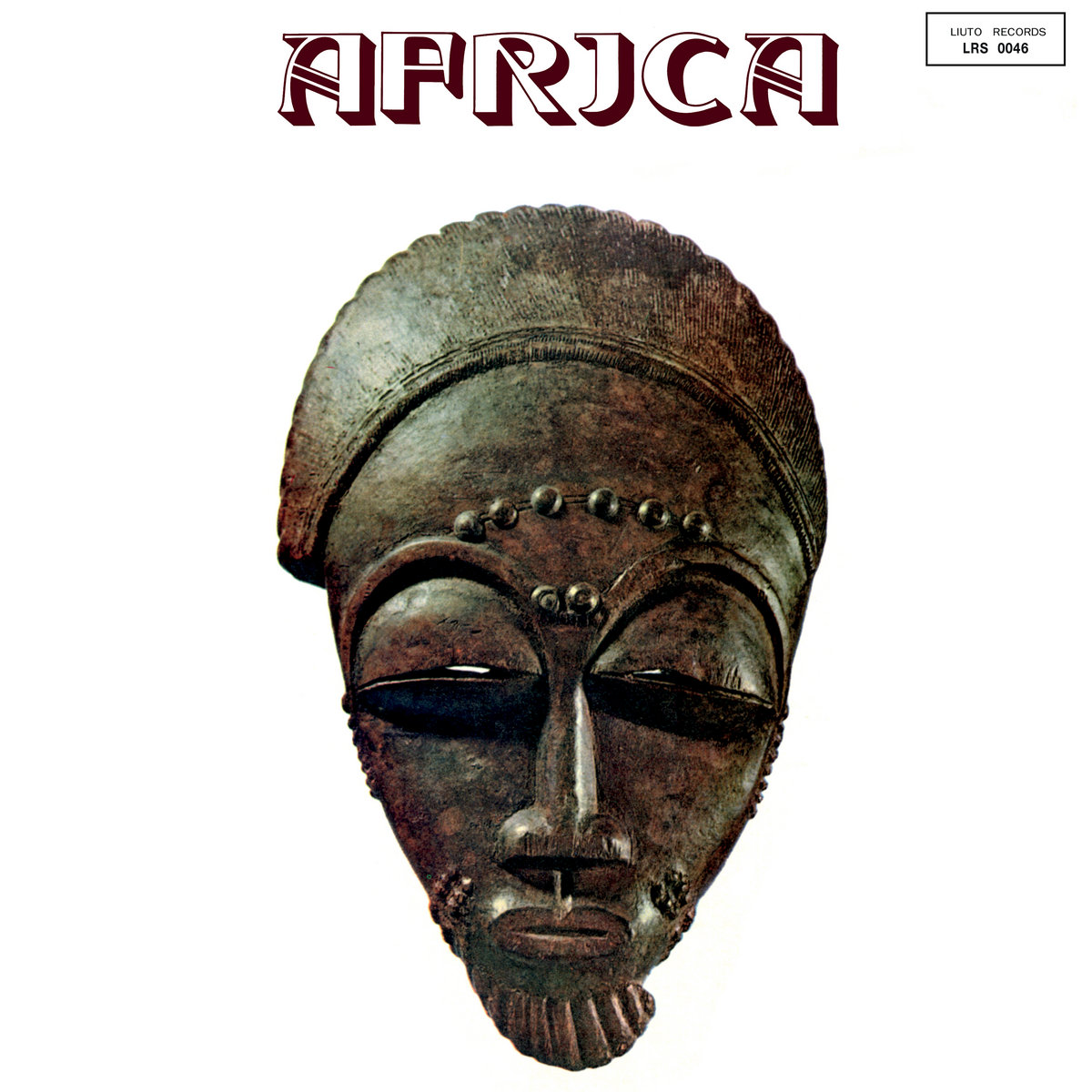
Released in 1975, three years after Africa, Continente Nero represents the perfect counterbalance to that earlier album—an exploration that had already significantly expanded the creative horizons of the Tuscan musician and composer.
BUY
12″ LP VINYL
CD
DIGITAL
With Africa, Umiliani began incorporating rhythmic variations he had only partially explored in works like Percussioni ed Effetti Speciali and To-day’s Sound, while also venturing into uncharted territory drawn from a then little-known musical heritage: the vast and diverse soundscape of Africa.
This time, Umiliani forgoes his usual pseudonym M. Zalla and proudly signs the record with his real name, marking his second deep dive into a continent he honors not only through inspiration but through understanding.
Continente Nero pays homage to Africa by drawing on both legendary and obscure sources—from the divine energy of Fela Kuti to amateur recordings and field research conducted by ethnomusicologists like David Toop, whose invaluable documentation continues to defy full comprehension due to the sheer complexity of Africa’s musical legacy.
But Umiliani also channels the pulse of African-American jazz history—the spiritual and revolutionary lineage of the Art Ensemble of Chicago, John Coltrane, Max Roach, and countless others. This confluence of influences becomes evident in tracks like Nuovi Fermenti, Rivoluzionari, Riscossa, and Ultimo Stregone—masterful compositions that showcase Umiliani’s rare ability to distill the essence of a tradition far removed from his own and reimagine it within a unique and thrilling sonic universe that stands shoulder to shoulder with the original.
In 1972, Piero Umiliani was primarily known as the man behind a thousand soundtracks and one of the pioneers of Italian jazz experimentation.
But even then, it was clear that this role only scratched the surface of a far more complex artistic identity.
BUY
7″VINYL
Digital
Digital
Confined within the walls of his Sound Work Shop Studio, the Maestro was weaving deeper, more rewarding sonic tapestries—drawing on decades of influences and a lifelong passion for exploration and experimentation.
Among the sounds that captivated him most were those from Africa: a continent that had long been romanticized but remained largely unfamiliar to European ears.
Umiliani was so entranced by its musical richness that he dedicated an entire album to it—Africa, a companion piece to its twin release Continente Nero, both issued under the alias M. Zalla.
This pseudonym became his chosen signature for bold, avant-garde excursions—an artistic space he would revisit in later cult classics like Suspense, Problemi d’Oggi, and Mondo Inquieto.
Keep in mind the release date—January 1972—when approaching the soundscapes contained in this record. You’ll encounter the progressive-tinged black rhythm of Africa To-Day, the “fourth world” ambiance reminiscent of Jon Hassell in Green Dawn, the exotic textures in the spirit of Martin Denny (Lonely Village, Echos), and even startling hints of electronic new wave in Sortilège. Folk influences emerge in tracks like Rite and Folk-Tune, showcasing yet another facet of Umiliani’s expansive palette.
With remarkable foresight, Umiliani anticipated and synthesized sonic elements that would only later become celebrated by far more renowned artists. In Africa, he didn’t just experiment—he laid the groundwork for future musical revolutions.
With the locution “Great Oxidation Event” we usually refer to the first major mass extinction that has been known on Earth. Occurred around 2,5 billion years ago, it consisted in a huge rise in oxygen in the atmosphere and shallow oceans that radically changed the conditions for the life on our planet, enabling the subsequent development of multicellular life forms.
BUY
12″ EP VINYL
Digital
As debut on his own label Hyperjazz Records, with ’The Great Oxidation EP’, electro-shaman Khalab comes back to his natural habitat: the dance floor.
With these three instrumental tracks, the visionary artist aims to drive the listener on a backward journey, down to rediscover the most ancestral human rite: to dance.
A return to the origin in a radical way to reach a brighter future, but also a bridge for another world – a new space where meet new life forms and uncover new feelings and new consciousness.
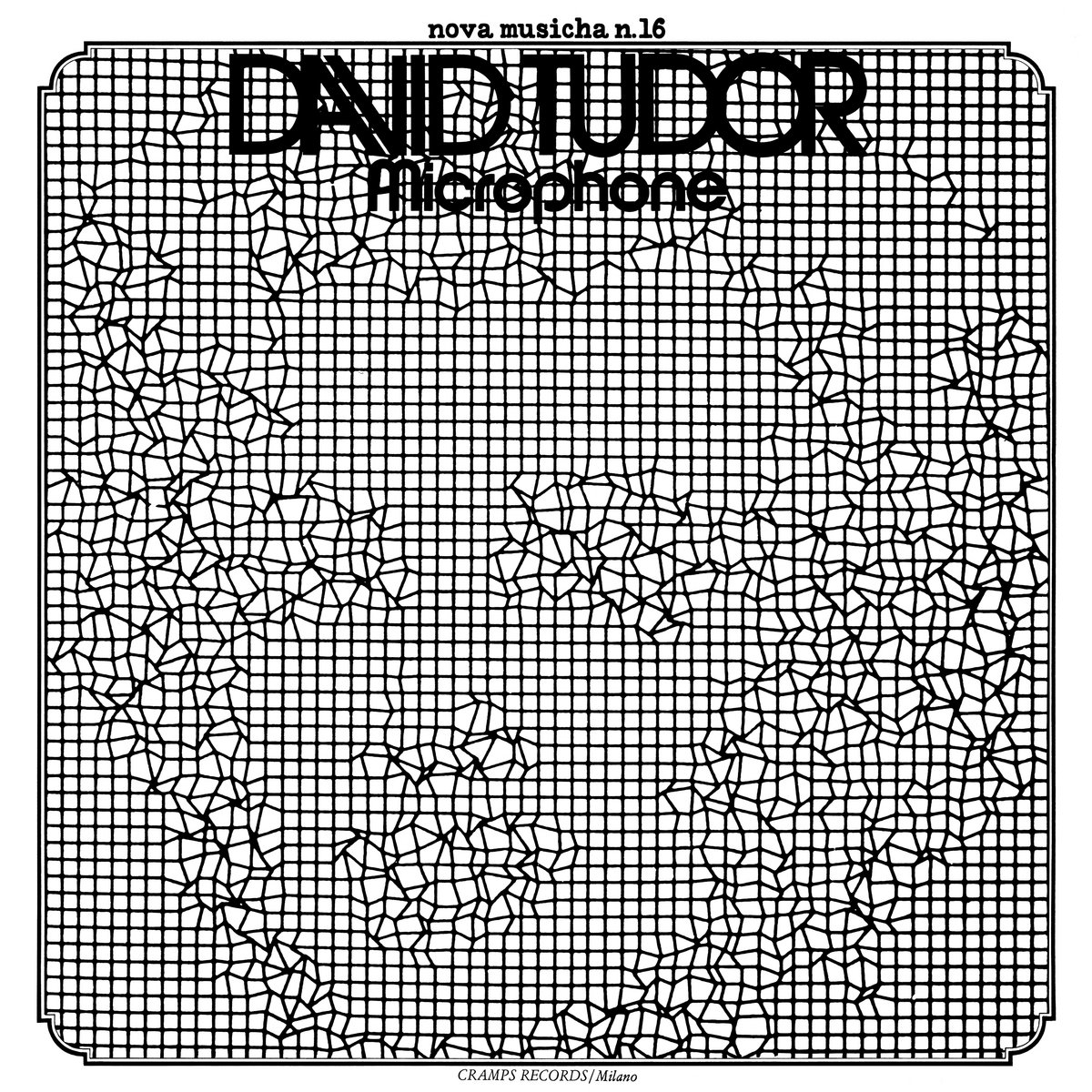
Among the most beloved and sought-after albums released by Cramps – now finally reissued on vinyl by Dialogo – was the American composer and pianist David Tudor‘s Microphone, originally issued in 1978.
BUY
12″ LP VINYL
CD
Arguably the most important interpreter of experimental music during the 1950s and ’60s – shooting to fame as a result of his early performances of works by Pierre Boulez, Karlheinz Stockhausen, Morton Feldman, Earle Brown, Christian Wolff and La Monte Young, David Tudor remains most famous for his long-lasting working relationship with John Cage. To this day, the power and importance of these collaborations casts a long shadow over his own work as a composer, despite it becoming the central axis of role in his creative output, beginning in the early 1960s.
David Tudor’s own compositions almost entirely rest in the electronic realm, deploying modular devices – largely designed and built by himself – which were allowed to define both composition and performance. Building upon the innovations of Rainforest – a multimedia work that began to emerge in variations during the late ’60s and early ’70s – among the most important and famous of Tudor efforts as a composer is Microphone, which became his first recorded appearance as a solo composer, when the album was issued by Cramps in 1978.
Microphone utilizes a single sound-source, the modulation of microphone feedback produced in a distant echo chamber, sculpted in incidence and duration by narrow band filters, with numerous versions recorded simultaneously, before being spliced onto two channels, using a pan-matrix. The end result became a library of 9 stereo tapes – recorded at Mills College during 1973 – each about 32 min. long, that were used in any combination – played and stopped at any point, rewound and played again, altered in amplitude and/or equalization – during live performances or for electronic installations.
The version of Microphone that appears on this LP captures its realization in 1973 at the Pepsi Pavilion of Expo ’70, in Osaka, Japan, and derives from discoveries made through the composer’s collaboration in the design of the Pavilion’s acoustic system, which used 37 loudspeakers placed in a rhomboid grid system covering 3/4 of the sphere.
Clocking in at nearly an hour in length, once heard, Microphone rapidly emerges as one of the most striking and important works of 1970s electronic composition. Restrained and defined by exacting control on the part of the composer / performer, deep tonalities of varying durations and textures pulse with a chasmic void, as though emerging, fulling formed from a dark unknown. Time slows in unexpected and destabilizing ways, weaving a spectrum of sound from the wholly synthetic that feels strikingly connected to the organic world.
A work that leaves you on the edge of your seat from start to finish, Microphone brings the towering importance of David Tudor’s work as a composer into full focus, nearly 50 years after it was first laid to tape. Absolutely stunning and just as thrilling and ahead of its time today as it was then, it’s impossible to express how excited we are to have Dialogo’s long overdue vinyl reissue finally in our hands. As essential as any reissue comes, and not to be missed on any count.
This is a release known mostly by Italian progressive rock lovers, since its sound can be easily associated to the jazz-rock delivered by the way more popular Napoli Centrale and Perigeo – but also to the ‘fundamentals’ Dedalus, Arti & Mestieri, Uno, if not Maad, Nadma or Aktuala, or even the lesser known Bauhaus for instance.
BUY
12″ EP VINYL
DIGITAL
But playing this kind of music and trying to release an album in the first half of the ’70s in Italy was also incredibly hard and courageous: Spirale, in fact, was one of the many bands that lived a very short life, before splitting up and disappear forever.
Spirale were an Italian quintet from Rome, consisting of Gaetano Delfini (wind instruments, vocals, percussion), Giancarlo Maurino (saxophone, ute, percussion), Corrado Nofri (piano, marimba, mbira, siren, Jew’s harp), Giuseppe Caporello (contrabass, guitar, percussion) and Giampaolo Ascolese (drums) who released a single eponymous album in 1974.
Spirale was originally released on the International King record label, thanks to Mario Schiano, a free-jazz saxophonist who discovered the band, and producer Toni Cosenza, who included the album in the ‘King Jazz-Line’ series.
Consisting of just four tracks, most of which taken by the 13-minute long “Cabral, Anno 1” and the marvellous 17-minute “Peperoncino (Cose vecchie, cose nuove)”, Spirale is an incredibly balanced and owing record that sounds still fresh and inspired even today, and it’s a shame that it has remained hidden and overlooked for such a long time. Moreover, it is characterized by that undescribable and particular Mediterranean avour that only Italian musicians were able to obtain.
This beautiful album is of course immensely rare in its original edition, and is now nally reissued on Dialogo record label in a faithful restored version that will finally satisfy any collectors who have waited for years for this beauty to see the light again!
Italy has proven to be a treasure trove of obscure, archival sounds. For decades, the products of its free-wheeling sonic countercultures – spanning numerous musical genres – remained as overlooked from within as without, until being uncovered by diggers searching for treasures in the shadows of time.
Thankfully, those efforts have morphed into countless revelations via the reissue market. Leading the way is the Milan based imprint Dialogo, who have made their name by diving far from the predictable path. Their latest, the first ever vinyl reissued of the lone, self-titled LP produced by the Rome based quintet, Spirale, in 1974, stands among their most exciting offerings to date.
A visionary hybrid at the juncture of rock and jazz, it was so ahead of its time that it remained almost entirely overlooked for decades, before ultimately ascending to holy grail status among lovers of Italian prog. Creatively thrilling – filled with emotive highs and lows – it’s a crucial piece in the puzzle of Italy’s wild and wonderful history of radical sound.
Founded in Rome by Gaetano Delfini (wind instruments, vocals, percussion), Giancarlo Maurino (saxophone, flute, percussion), Corrado Nofri (piano, marimba, mbira, siren, Jew’s harp), Giuseppe Caporello (contrabass, guitar, percussion) and Giampaolo Ascolese (drums), Spirale is among the most obscure projects to have emerged from Italy during the first half of the 1970s.
Almost as soon as their lone, self-titled LP was issued by International King Record in 1974, the trial goes dark. Members turn up on recordings by Gaetano Liguori Collective Orchestra, Folk Magic Band, and numerous other projects over the years, but in this incarnation the music on Spirale seems to be all we have.
Spirale’s fate seems to have rested with the simple fact that they were too ahead of their time, producing a music that would subsequently come to find broad favour among audiences of popular music only a year or two down the road.
Their lone, self-titled LP, carving out uncharted territory between Bitches Brew era Miles Davis and mid-70s Soft Machine, pushed progressive rock into a near undefinable realm; not rock enough to be called rock, not jazz enough to be called jazz.
Across the two sides of Spirale, comprising four works, a band of uncompromising talent stretches out, laying down cycling rhythms and bass lines that channel the modalism of John Coltrane, the funkiness of Donald Byrd, and hypnotic psychedelia, before embarking upon melodic excursions – peppered with Mediterranean sensibilities – into the outer realms.
Joyous, engrossing, and the product of exacting musicianship, how Spirale remained overlooked for all these years is one of the great mysteries of Italian music.
An absolute revelation of the highest order brought to us by the capable hands of Dialogo, the first time ever reissue of this 1974, obscure masterstroke is an absolute must for any fan of prog, jazz, or Italian music at large.
Beautifully pressed with fully restored and remastered audio and issued in a facsimile gatefold sleeve, reproducing the stunning original design, Spirale is just about as good as reissues get.
GALATEA is the latest project conceived and produced by DJ Massimo Napoli—and also the title of his debut album.
Inspired by Greek mythology, Galatea is one of the fifty Nereids—sea nymphs and daughters of Nereus and Doris.
BUY
12″
CD
DIGITAL
Her name evokes the atmosphere that permeates this production: dub-infused soundscapes, spiritual undertones, and Afro-inspired settings.
Although eclectic at first glance, the album reveals a distinct and cohesive identity deeply rooted in Napoli’s artistic vision. It emerges from a solid foundation in club culture and a deep connection to electronic dub, evolving into a rich tapestry of influences that make the album truly unique.
Mediterranean vibes, Afro rhythms, cinematic melodies, jazz elements, spiritual nuances, and hypnotic textures guide the listener on an unconscious journey of escape. Across ten seamlessly blended tracks, the album showcases how thoughtful, meticulous production—through genre fluidity and diversity—can naturally lead to a dreamlike listening experience.
AVAILABLE ON BANDCAMP
Track By Track Overview
DUB SUNSET – Co-written with producer and musician Salvo Dub, this track opens with a dynamic, percussive energy before transitioning into a more minimal, dub-electronic second half.
SIMETO – Asian nuances intertwine with jazz as a delicate sitar melody flows gracefully over dub textures—like a river gently reaching the sea. The title references the Simeto River (Symaithos in ancient Greek), which runs from the slopes of Mount Etna to the Ionian Sea.
AFRICAN JAZZ – A sonic journey through the savannah, this track blends African dub and percussion into a deeply spiritual and evolving composition.
SPIRITUAL WIND – Rooted in the essence of spiritual jazz, this track features a 5/4 time signature, a resonant double bass line, and semi-operatic vocals that evoke introspection and depth.
DUNE – Bridging Africa and the Caribbean, this track draws on Cuban and Puerto Rican influences. The magic lies in its seamless fusion of Latin rhythms with dub sensibilities.
AFRIQUE – Nigerian Afro-funk grooves meet dub vibrations in a track that is both powerful and accessible, offering an innovative and rhythmically rich listening experience.
BLACK SAND – A fusion of Afro-dub and jazz, where traditional African instruments and dub effects enhance an emotionally charged vocal performance.
SIRENS – An ethereal, percussive piece that could be described as the “song of the sirens,” featuring ambient sea sounds, seagulls, and the mythical, suspended voices of sirens.
SCIROCCO – Warm and hypnotic, with Asian tonalities, this track evokes the Shurhùq—the southeast wind that sweeps over the Mediterranean. It’s a bold synthesis of musical cultures, infused with spiritual dub elements.
KARMA BLUES – A powerful Afro-blues piece brought to life by the kora and traditional African vocals, adding rich atmospheric color.
AMANECER – Meaning “dawn,” this track feels like the soundtrack to a sunrise, with sweeping strings, ocean waves, and the distant call of seagulls welcoming a new day.
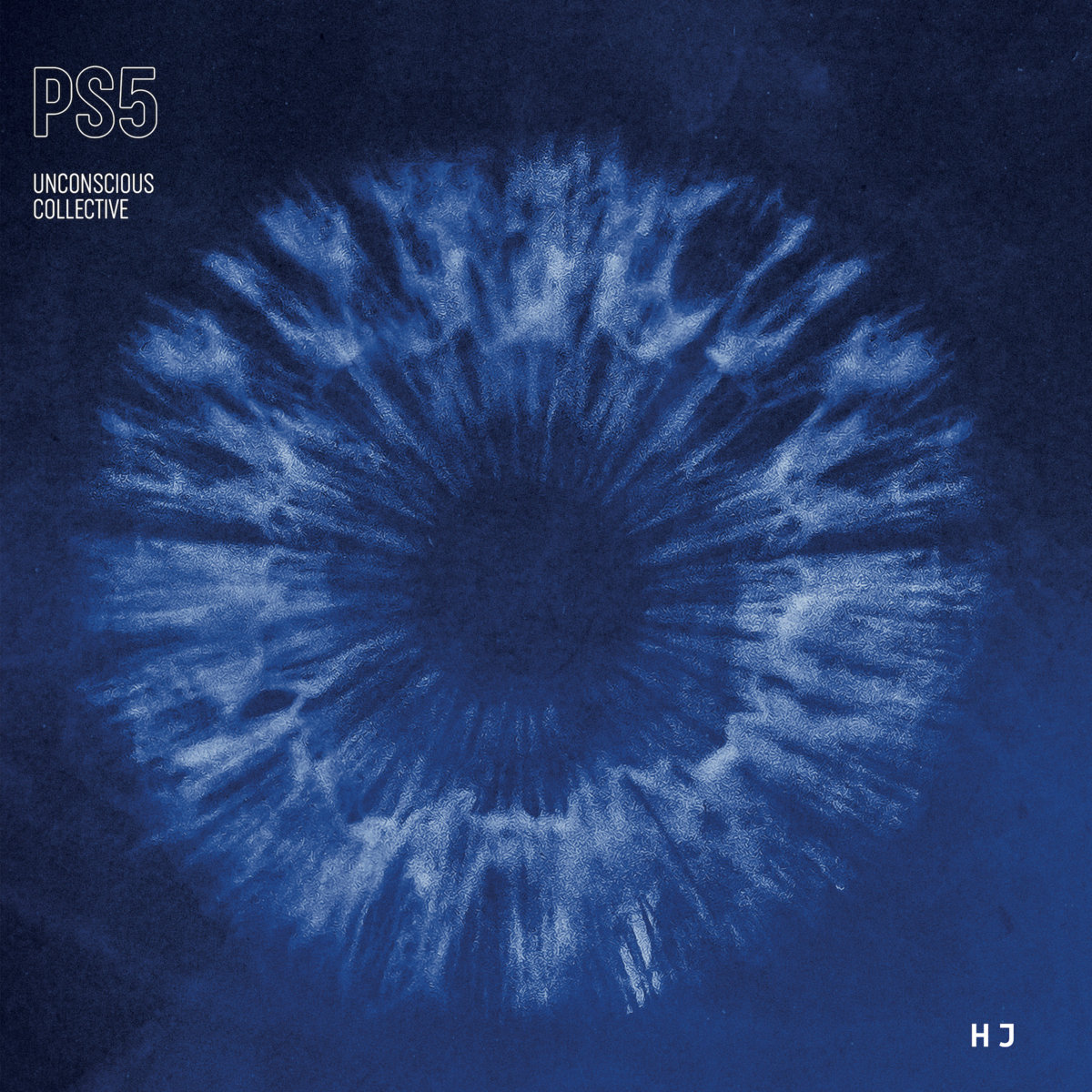
‘Unconscious Collective’ is the debut album from PS5, the new ensemble led by Pietro Santangelo (Nu Guinea, Slivovitz, Fitness Forever), set for release on May 21, 2021, via Hyperjazz Records. The album marks another step in the label’s ongoing journey to bridge the musical traditions of Southern Italy with a deep appreciation for African-American music and contemporary forms of expression..
BUY
12″ LP VINYL
DIGITAL
‘‘Unconscious Collective’ is a musical experiment in which layered memories and hidden emotions emerge as if drawn directly from the deepest recesses of the unconscious, momentarily suspending the stream of consciousness. Aiming to induce a trance-like state and transcend rational thought, the album imagines a symbolic journey across the Mediterranean Sea and the Atlantic Ocean—ideally linking Naples with Northern and Sub-Saharan Africa, as well as Latin America.
The arrangements, written by Santangelo, are rooted in a profound freedom of improvisation. While the melodic lines of the two saxophones offer no clear points of reference, the other musicians navigate the rhythmic pulse and its unpredictable pathways..
The music flows effortlessly along an imaginary line that highlights the ancestral connections between places like Jamaica and Ethiopia, or Nigeria and Cuba.
At the heart of it all is Naples—a city that acts as a crucible where all these sonic ingredients are mixed and simmered in its mystical, spicy core. Alongside Santangelo on tenor and soprano saxophones, the collective features: Paolo Bianconcini, a brilliant Neapolitan percussionist with a deep Afro-Cuban background; Giuseppe Giroffi, a young and talented alto and baritone saxophonist; Vincenzo Lamagna on bass; and Salvatore Rainone on drums—both long-time collaborators from Santangelo’s former trio.
Recorded live at Auditorium Novecento in Naples—the legendary studio of Phonotype Records—Unconscious Collective was mixed in analog by Fabrizio Piccolo and mastered by Davide Barbarulo at his 20Hz20KHz Studio.
Pietro Santangelo Pietro was born, lives, and plays in Naples. As a saxophonist and composer, he has released five albums with Slivovitz and one with his PS3 trio (Clinamen, Emme records 2017).
Graduated in Digital Sound Processing at the Faculty of Physics of Federico II University, he is involved and engaged in the Italian scene of radical improvisation (Franco Ferguson, Elio Martusciello and Officina Arti Soniche, Collettivo NISE).
Multi-instrumentalist since forever, he has collaborated with Nu Guinea, Enzo Avitabile, Fitness Forever, Marzouk Mejri, Dennis Bovell, and many others. He’s also soundtracks author and electronic musician. He appreciates analog photography, loves walking outdoors. He hates biographical notes.
‘Mixtape vol. I’ is an instrumental beat collection that outlines a new chapter in Trrmà’s creative process. Giovanni Todisco (drums) e Giuseppe Candiano (electronics) made a trip down their memory lanes and created something new which is a direct expression of their musical roots.
BUY
Digital
‘Mixtape vol. I’ blends together hip-hop attitude, Detroit techno synthesis, and what we call ‘hyperjazz’. The result of this mix is something not obvious or permanent, and it engages perfectly the Hyperjazz’s intentions to define a new way of conceiving rhythmic music in our century. Inspired by the most refined beat-making scene, this work is distinguished by special live drums processing mixed with electronic beats, detuned vocal samples, classic synth, and cosmic sounds.
VOL2
Adventurous sounds with electro-acoustics abstract, uplifting jazz grooves, and wonky electronic vibes: Trrmà are back! Following the first work released by Hyperjazz in 2021, Mixtape Vol. II is an explosive hybrid of experimental hip-hop and avant-garde electronic sounds.
BUY
Digital
Influenced by the most refined beat-making culture, they propose – from a “live band perspective” – their personal juicy sonic sauce and their ultimate feeling of freedom. Groovy instrumentals, heavy bass-tinged tracks, subtly swung beats, weird riffs, and rowdy samples. Trrmà manipulates a dynamic range of sounds into their distinctive design that borders on psychedelic and blends with electronic synthesis. This is definitely something worth checking out if you like to explore innovative soundscapes and blow your own mind with futuristic sights.
Per fornire le migliori esperienze, utilizziamo tecnologie come i cookie per memorizzare e/o accedere alle informazioni del dispositivo. Il consenso a queste tecnologie ci permetterà di elaborare dati come il comportamento di navigazione o ID unici su questo sito. Non acconsentire o ritirare il consenso può influire negativamente su alcune caratteristiche e funzioni.
Funzionale
Always active
L'archiviazione tecnica o l'accesso sono strettamente necessari al fine legittimo di consentire l'uso di un servizio specifico esplicitamente richiesto dall'abbonato o dall'utente, o al solo scopo di effettuare la trasmissione di una comunicazione su una rete di comunicazione elettronica.
Preferenze
L'archiviazione tecnica o l'accesso sono necessari per lo scopo legittimo di memorizzare le preferenze che non sono richieste dall'abbonato o dall'utente.
Statistiche
L'archiviazione tecnica o l'accesso che viene utilizzato esclusivamente per scopi statistici.L'archiviazione tecnica o l'accesso che viene utilizzato esclusivamente per scopi statistici anonimi. Senza un mandato di comparizione, una conformità volontaria da parte del vostro Fornitore di Servizi Internet, o ulteriori registrazioni da parte di terzi, le informazioni memorizzate o recuperate per questo scopo da sole non possono di solito essere utilizzate per l'identificazione.
Marketing
L'archiviazione tecnica o l'accesso sono necessari per creare profili di utenti per inviare pubblicità, o per tracciare l'utente su un sito web o su diversi siti web per scopi di marketing simili.